

Key Highlights
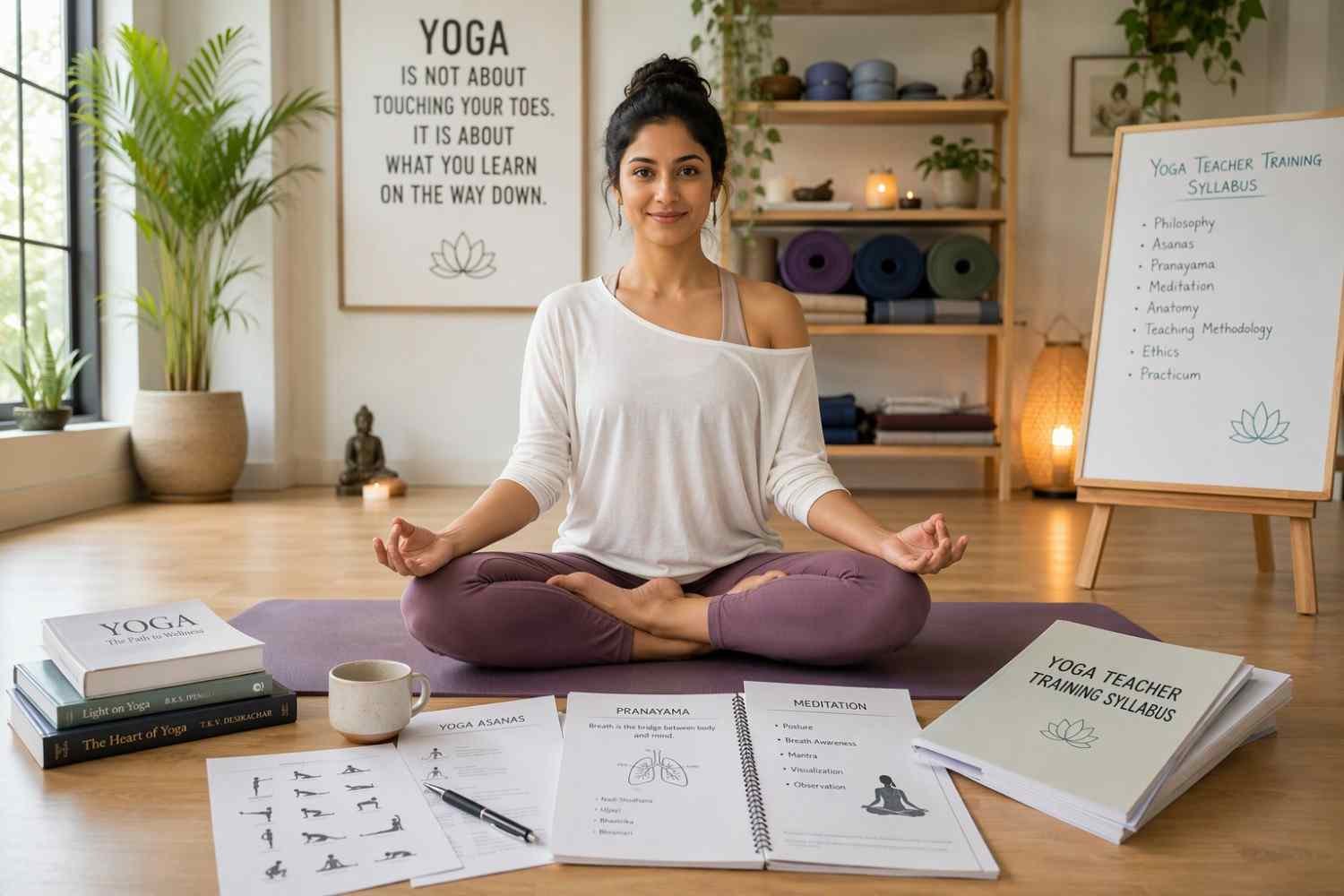
- A 200 Hour Yoga Teacher Training in Rishikesh gives you a strong base in asana practice, yoga philosophy, and practical teaching.
- Many programs follow Yoga Alliance expectations and include contact hours across a clear core curriculum.
- You study vinyasa yoga and often Ashtanga-based sequencing to build confidence in class planning.
- Anatomy & physiology help you teach safely, with better alignment and student modifications.
- Breathwork, meditation, mantra chanting, and cleansing practices support your full yoga practice.
- Practice teaching, adjustments, and teaching methods prepare you for real yoga teacher work.
Introduction
A 200 hour yoga ttc syllabus is much more than a training course for becoming a yoga teacher. It is a structured way to build your own practice while learning how to guide others with clarity and care. You study movement, breath, philosophy, and teaching skills in one connected path. If you have been wondering what subjects are included and how the syllabus is organized, this guide will walk you through the essential areas you can expect to learn.
Overview of the 200 Hour Yoga Teacher Training Course
A 200 hour yoga ttc syllabus course usually combines physical practice with study, reflection, and teaching development. In a good yoga school, the core curriculum covers asana, breathwork, meditation, anatomy, philosophy, alignment, and teaching methods.
You are not just learning poses. This hour yoga teacher training helps you grow into a more aware yoga teacher through daily structure, guided practice, and a broader understanding of yoga. The next sections explain its purpose and who benefits most from teacher training.
Purpose and Goals of the 200 Hour Yoga TTC
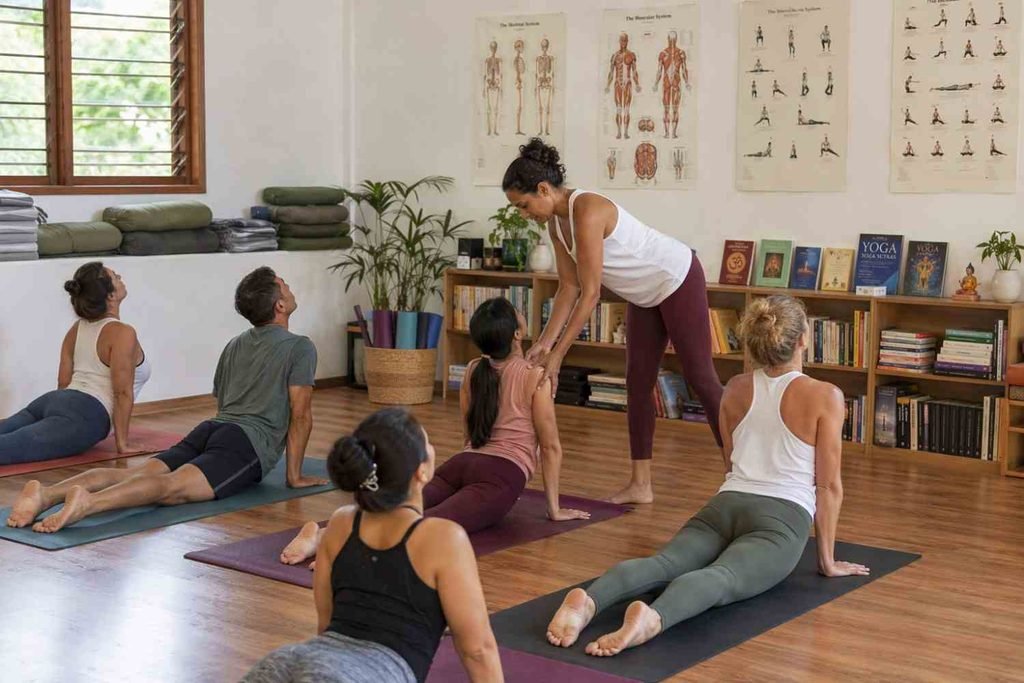
At its heart, yoga teacher training is designed to give you a strong foundation. That foundation includes regular yoga practice, knowledge of alignment, breathing technique, meditation, and the basic principles behind skillful instruction. You learn how the different aspects of yoga connect rather than treating them as separate topics.
Another key goal of a teacher training course is personal growth. As you move through daily classes and study, you build discipline, deep awareness, and a clearer understanding of your own habits on and off the mat. This supports both practice and teaching.
Just as important, the course prepares you to share yoga with others. You begin to understand sequencing, modifications, and essential teaching methods, so you can guide students with more confidence, care, and purpose.
Who Should Consider a 200 Hour Yoga Teacher Training
This training is a good fit for more than one type of student. You might join because you want to become a yoga teacher, or because you want a stronger personal practice and a deeper understanding of yoga classes. Both reasons are valid.
If you are an aspiring yoga teacher, this program helps you move toward the role of yoga instructor with structure and support. You study how to teach, how to observe bodies, and how to adapt a class to different needs.
You may want this training if:
- You hope to become a yoga teacher and lead classes in the future.
- You want to improve your own alignment, breath, and focus.
- You enjoy yoga classes and want to understand what happens behind the teaching.
- You are ready for a disciplined, immersive learning experience.
Understanding the 200 Hour Yoga TTC Syllabus
A 200 hour yoga ttc syllabus maps out what you study, how the contact hours are used, and which subjects form the core curriculum. It gives shape to the entire course, so you know where your time and energy go.
In many registered programs, the syllabus is built to align with Yoga Alliance expectations. That means the training is not random. It follows a balanced path that includes practice, study, and teaching preparation. To understand that clearly, it helps to look at structure first and standards next.
Structure and Duration of the Program
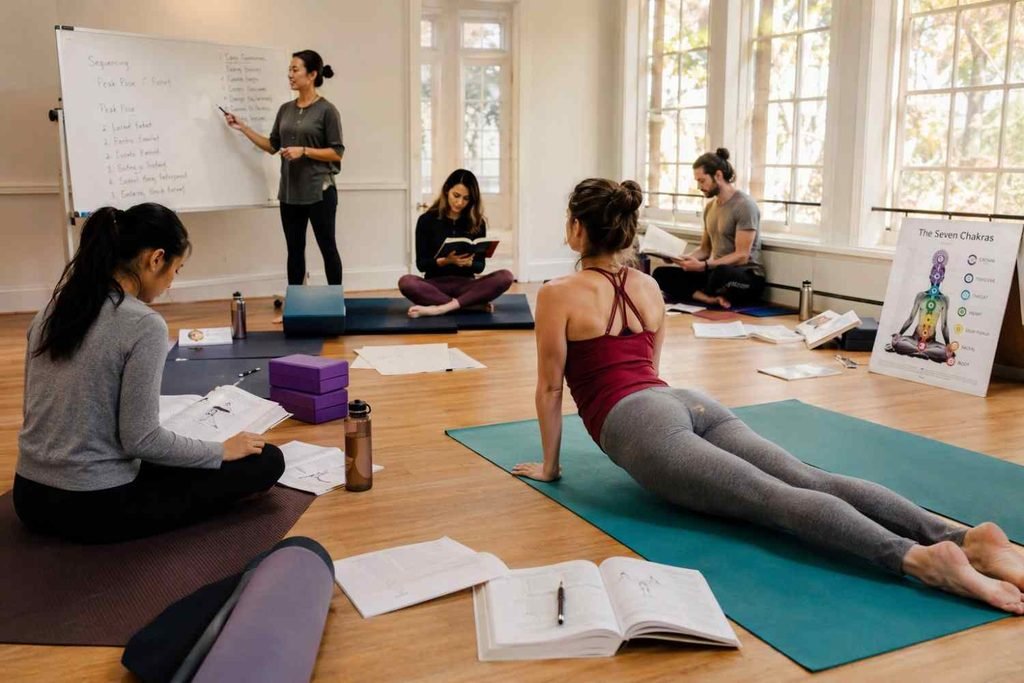
Most hour yoga teacher training programs are organized over four weeks, with a clear daily rhythm. In the compiled example, students begin early, move through pranayama and Vinyasa Flow, then study anatomy and yoga philosophy before returning to alignment, Ashtanga Vinyasa practice, and evening meditation.
This structure helps you absorb the core curriculum step by step. It is not only physical. The duration supports repeated exposure to movement, theory, and reflection, which makes learning more steady and practical.
| Time/Stage | Focus |
|---|---|
| Early morning | Wake up, herbal tea, shatkarma or pranayama |
| Morning practice | Vinyasa Flow yoga practice |
| Late morning | Yoga anatomy and yoga philosophy |
| Afternoon | Yoga body alignment and Ashtanga Vinyasa yoga practice |
| Evening | Meditation, mantra chanting, dinner |
| Week by week | Cleansing practices and meditation methods are introduced across the four weeks |
Meeting Yoga Alliance Standards
Yes, some schools present their hour yoga teacher training syllabus as registered with Yoga Alliance. When a program is structured this way, it is designed to support certification goals and cover the professional essentials expected from foundational teacher training.
That usually means the syllabus includes a mix of asana, anatomy, philosophy, pranayama, meditation, alignment, and teaching practice rather than focusing on only one area. A balanced program helps you meet baseline expectations for both personal study and future teaching.
If Yoga Alliance matters to you, check whether the yoga school clearly states its registration and whether the syllabus reflects those standards in a practical way. From there, you can better judge if the training supports your learning goals and certification path.
Key Subjects in a 200 Hour Yoga TTC Syllabus
The key modules in a yoga teacher training syllabus usually include posture work, breath training, meditation, anatomy, alignment, and yoga philosophy. These areas give you both intellectual understanding and direct embodied experience.
You also build teaching experience through observation, sequencing, and guided instruction. A strong syllabus does not treat philosophy and practice as separate worlds. Instead, it shows you how they support one another. The next three sections break down these subjects so you can see what each one adds to your development.
Asana Practice and Techniques
Asana practice is one of the biggest parts of the training. In the compiled curriculum, the backbone of the program comes from ashtanga yoga and vinyasa yoga. You study postures in a clear sequence, learn how breath supports movement, and develop more steadiness in your own practice.
This part of the course also includes technique. You work on alignments, variations, adjustments, modifications, and the use of yoga equipment. That matters because strong yoga practice alone does not automatically prepare you to teach others safely.
Practical teaching components often include:
- Learning key alignment points in major postures
- Practicing variations and student modifications
- Understanding sequencing for Vinyasa Flow classes
- Building your own practice so your teaching has depth
Anatomy, Physiology, and Yoga Philosophy
Yes, anatomy & physiology and yoga philosophy are central parts of many 200 hour trainings. Yoga anatomy helps you understand the body in motion, including the respiratory, skeletal, muscular, digestive, cardiovascular, endocrine, and nervous systems. This creates a safer base for practice and instruction.
Functional anatomy also supports better alignment and injury prevention. When you know how muscles, joints, and breath interact, you can fine-tune postures and offer clearer guidance to different bodies. Inversions, bandhas, and the breath connection are also often included.
Yoga philosophy gives context to what you are doing on the mat. In the compiled material, this includes the ancient Vedas, darshan shastras, Patanjali’s yoga sutras, the limbs of yoga, and themes from the Bhagavad Gita. That study deepens your understanding of yoga beyond movement alone.
Meditation, Pranayama, and Breathwork
A complete 200 hour training usually includes meditation and pranayama training, not just posture classes. In the compiled schedule, breathwork begins early in the day, and meditation with mantra chanting appears again in the evening. This creates a steady rhythm of internal practice.
Pranayama develops your breathing technique, energy awareness, and mental clarity. Students may learn methods such as Bhastrika, Nadi Shodhan, Ujjayi, Bhramari, Surya Bhedi, and Sheetali. These practices support focus and help you understand how breath shapes the whole yoga experience.
Meditation and breathwork study may include:
- Daily pranayama sessions
- Guided meditation across the four weeks
- Mantra chanting and Veda mantra exploration
- Practice teaching that connects breath with movement and pacing
Beginner’s Guide to Starting Your 200 Hour Yoga TTC
Starting your training can feel exciting and a little intense. The best first step is to choose a yoga school with a clear structure, supportive teaching, and a syllabus that matches your goals. If you want to become a yoga teacher, clarity at the beginning makes a big difference.
You do not need to know everything before day one. What helps most is steady yoga practice, openness to learning, and a willingness to show up each day. The following sections walk through equipment, planning, research, and preparation for future students and deeper study.
What You Need to Begin: Equipment and Resources
Before yoga training starts, it helps to gather the basics so your focus stays on learning. Some schools include key items such as a yoga mat and books, while others expect you to bring your own. Check what your yoga school provides before you pack.
The right equipment and resources do not need to be complicated. You mainly need the materials that support daily practice, study, and organization. Simple preparation can make the first week feel much smoother.
Useful items often include:
- A yoga mat if it is not provided
- Course books or reading materials from the school
- Comfortable clothing for daily movement and seated practice
- A notebook to track lessons, sequencing ideas, and resources
Step-by-Step Guide to Getting Started with 200 Hour Yoga TTC
If you are wondering how to begin, think of the process as a few clear steps rather than one big leap. A yoga teacher training course becomes easier to manage when you break it into research, preparation, and enrollment.
First, look closely at the training course structure. Then consider whether the teaching style, curriculum, and schedule suit your needs. In an hour ytt, daily consistency matters, so the right fit is important.
A simple way to get started is:
- Research a school and review the syllabus
- Confirm whether the program is registered with Yoga Alliance
- Prepare your body and mind for daily practice
- Enroll in the course and organize your materials
- Review the schedule so you know what the yoga teacher training course requires
Step 1: Research Accredited Yoga Schools
Begin by studying the yoga school itself. Look at how the teacher training course is described, what subjects are included, and whether the daily schedule feels realistic for you. A clear syllabus is a good sign because it shows the school has a structured approach.
It also helps to check whether the program is connected to Yoga Alliance. If the school states that it is registered, that can give you more confidence that the curriculum is designed around recognized training expectations.
Accredited or registered details are only part of the picture, though. You should also look at the style focus. For example, some programs are built on Ashtanga and Vinyasa foundations, while also encouraging flexibility in teaching for different student needs.
Step 2: Preparing Physically and Mentally for the Course
Once you choose a course, spend some time getting ready for the rhythm of training. Daily classes, study sessions, and self-reflection ask a lot from you. A little physical preparation and mental preparation can make the transition much smoother.
You do not need to arrive perfect. What matters is building consistency in your yoga practice and becoming comfortable with regular asana practice, breath awareness, and quiet focus. Training works best when you show up ready to learn, not ready to impress.
Helpful preparation includes:
- Practicing regularly so your body adjusts to daily movement
- Building comfort with breathwork, stillness, and concentration
- Getting mentally ready for a disciplined schedule and new information
Step 3: Enrolling and Organizing Materials
After research and preparation, the next step is enrollment. Confirm your dates, ask what is included, and make sure you understand the course schedule. Some schools include lodging, meals, books, and a mat, which can simplify the process.
Organization matters more than people think. Keep your documents, reading materials, and personal notes in one place. When your schedule is full, simple organization saves energy and helps you stay focused on the teacher training course itself.
It is also useful to understand what you receive at the end. If you complete the required work, the school may issue a certificate of completion. That document reflects your finished training and can support your next step as a yoga teacher.
Practical Teaching Experience and Assessments
A strong yoga teacher training program does not stop at personal practice. It gives you teaching experience, chances for practice teaching, and a way to show what you have learned. That is how theory begins to turn into real skill.
Assessments and exam methods can vary by school, but they usually connect to the actual course content. You may be observed while teaching, tested on key ideas, or reviewed through participation and practical understanding. Let’s look at teaching practicum first, then how evaluation often works.
Teaching Practicum and Classroom Management
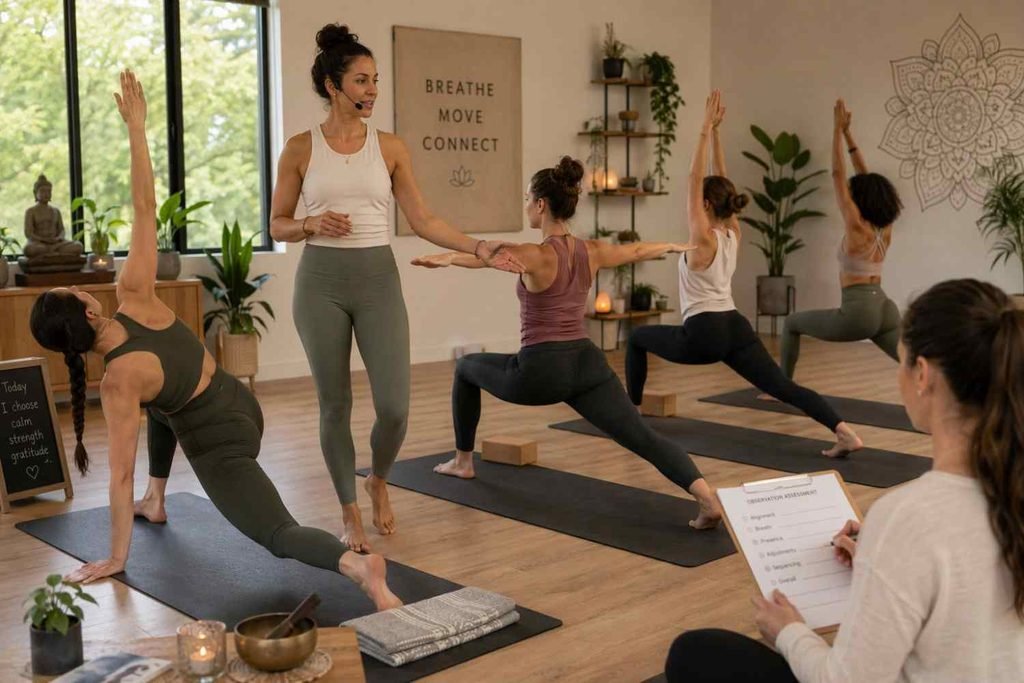
Teaching practicum is where your learning becomes active. You move from receiving instruction to giving it, even in small ways. This teaching experience helps you test your voice, cueing, pacing, and presence while still having guidance around you.
Classroom management is part of that process. It is not only about keeping order. It is about reading the room, adapting for different bodies, and creating a safe, focused environment. This becomes especially important when you are working with alignment, modifications, and sequencing.
Key practicum skills often include:
- Giving clear verbal cues during practice teaching
- Demonstrating or explaining alignment points
- Managing timing and class flow
- Adapting your approach for different student needs
How Assessments and Exams Are Conducted
In a yoga teacher training program, assessments are usually tied to the subjects you study each day. Instead of one isolated exam, schools may evaluate your progress through attendance, practical understanding, participation, and how well you apply what you learn in class.
Some assessments can focus on teaching ability. For example, you may be asked to guide a short sequence, explain alignment, or show that you understand breath and posture relationships. This makes the exam process feel closer to real teaching than to memorization alone.
At the end of the program, successful completion may lead to a certificate of completion. That result reflects your work across the full training, including practice, study, and demonstrated readiness to move forward.
Comparing Online vs. In-Person 200 Hour Yoga TTC Syllabi
The main difference between an online course and an in-person training is how the same core subjects are delivered. Both can cover posture, breath, anatomy, philosophy, and teaching basics, but the learning experience feels different.
An in-person hour yoga teacher training course often follows a fixed daily routine with direct observation and community support. Online yoga teacher training may offer more flexibility, especially if it is self-paced. The next sections compare content delivery, learning style, and the benefits and limits of each format.
Differences in Content Delivery and Learning Experience
Content delivery shapes how you absorb the material. In-person training usually gives you live classes, immediate corrections, and a shared daily schedule. That can make anatomy, alignment, and hands-on learning feel more direct and immersive.
By contrast, online training often changes the learning experience through flexibility. You may review lessons on your own schedule and revisit material more easily. That can be helpful if you need time to process information or balance other responsibilities.
| Format | Content Delivery and Learning Experience |
|---|---|
| In-person training | Fixed schedule, live instruction, direct observation, shared practice environment |
| Online training | Remote access, flexible pacing, repeated lesson review, more independent study |
| In-person learning | Immediate feedback during posture, breath, and sequencing work |
| Online learning | Greater convenience, but less physical presence and fewer in-room interactions |
Benefits and Challenges of Each Format
Each format has strengths. An online course can make the yoga teacher training syllabus easier to access, especially if you need flexible scheduling. In-person study can offer stronger accountability and more direct support during practice.
Still, both formats come with trade-offs. A self-paced approach can feel freeing, but it also asks for discipline. In-person learning can be immersive, though it may be less flexible and more demanding on your schedule.
Consider these pros and challenges:
- Online course: flexible access and easier review of lessons
- Self-paced learning: helpful for busy students, but requires consistency
- In-person training: direct feedback and community connection
- In-person format: strong immersion, but less scheduling freedom
Yoga Styles Included (Ashtanga & Vinyasa Yoga)
Many 200 hour yoga ttc syllabus programs are rooted in ashtanga yoga and vinyasa yoga. In the compiled material, Ashtanga forms the backbone of the program because its correct sequential order builds discipline, focus, and a steady learning process. Students refine postures step by step and connect breath with movement in a very intentional way.
At the same time, vinyasa yoga brings adaptability into your yoga practice. You learn how to link postures smoothly and how to create flow classes that respond to different student needs. This matters because teaching often requires flexibility, not just repetition. Some schools also mention other different styles of yoga, such as Yin Yoga, to give students broader exposure and a more balanced overall training experience.
In-Depth Guide to Anatomy’s Role and Student Modifications
Anatomy & physiology play a practical role in every part of training. A better understanding of the anatomy of the body helps you see how breath, muscles, joints, and movement patterns work together. In the compiled curriculum, this includes the respiratory system, skeletal system, muscular system, pelvic girdle, trunk, shoulder girdle, digestive system, cardiovascular system, inversions, and the relationship between the endocrine and nervous systems.
That knowledge supports safer teaching. When you understand structure and function, you can offer student modifications that match different bodies rather than forcing one shape on everyone. This is especially useful for alignment, inversions, and progressive posture work. Good anatomy study supports injury prevention, clearer cueing, and more thoughtful choices about how a student should enter, hold, or adapt a pose.
What’s Missing? Filling the Syllabus Gaps for Aspiring Teachers
Even a strong teacher training course cannot cover everything in depth. A foundational yoga teacher training syllabus usually focuses on practice, philosophy, anatomy, meditation, pranayama, alignment, and essential teaching methods. That is enough to build a solid start, but it still leaves room for continued learning after graduation.
For many aspiring teachers, broader education becomes the next step. In the compiled material, schools may widen the experience through Yin Yoga and Thai Yoga massage, which help students work with different bodies and understand hands-on adjustments more safely. One area not clearly detailed in the provided syllabus is the business of yoga. So if you want to teach professionally, you may need additional study in class building, communication, and long-term teaching development.
Self-Paced & Flexible 200 hour yoga ttc syllabus: Pros, Cons, and Best Practices
A self-paced or flexible training course can make online yoga teacher training easier to fit into everyday life. If you need more control over your schedule, this format can help you keep moving without having to follow a fixed in-person routine. That flexibility is one of the biggest pros, especially when reviewing detailed subjects like anatomy, philosophy, or sequencing.
Still, the pros and cons need honest attention. Self-paced learning can reduce pressure, but it also asks for discipline and regular self-checks. Without a steady rhythm, it is easy to drift. The best practices are simple: follow a weekly plan, review the full syllabus in order, and stay consistent with practice. If a program offers lifetime access, use that benefit wisely by revisiting key lessons instead of rushing through them once.
Conclusion
In conclusion, embarking on a 200 hour yoga ttc syllabus Course is an enriching journey that goes beyond just mastering poses. It encompasses a deep understanding of anatomy, philosophy, and the art of teaching, equipping you with the skills necessary to guide others in their yoga practice. Whether you’re considering an online format or seeking in-person experience, being well-informed about the syllabus can enhance your learning and teaching effectiveness. This course not only generates a solid foundation in yoga but also cultivates personal growth and mindfulness. If you’re ready to take the next step in your yoga journey, don’t hesitate to get a free consultation to explore your options further!
Frequently Asked Questions
Yes. In a well-rounded yoga teacher training, anatomy and philosophy are core subjects. You study functional anatomy to understand safe movement and alignment, and yoga philosophy to explore the roots of practice through texts, ideas, and the wider meaning of yoga beyond posture.
Yes, many programs include both meditation and pranayama. A strong yoga teacher training syllabus uses breathwork and seated practices to build focus, energy awareness, and inner steadiness. In an hour yoga teacher training syllabus, these areas often appear daily alongside movement and philosophy study.
The course structure is often spread across four weeks with daily sessions in posture, pranayama, anatomy, philosophy, alignment, and meditation. Week by week, students add cleansing practices, sequencing skills, and teaching development. In a Yoga Alliance-focused training course, this progression supports balanced foundational learning.
Yes, some schools share a sample syllabus on their websites. Reviewing a yoga teacher training course outline online can help you compare subjects, schedules, and style focus. A clear hour yoga teacher training syllabus should show how practice, study, and teaching skills are organized.
A 200 hour yoga teacher training is enough to build a strong foundation, but it is still a beginning. It prepares you for yoga teaching with core skills, personal discipline, and basic confidence. Many students continue learning afterward as they grow into the role of yoga teacher.
It is a foundational training course that organizes yoga teacher training into 200 contact hours of study and practice. Those hours usually cover movement, breath, anatomy, philosophy, meditation, and teaching basics. The goal is to build professional essentials and prepare you for further development.
For a beginner yogi, yoga teacher training can feel like a real challenge because the schedule is full and the learning is deep. Still, a clear training course offers support through structure, repetition, and guided teaching, helping you improve step by step rather than all at once.
The topics covered in a yoga teacher training syllabus usually include asana practice, anatomy, yoga philosophy, pranayama, meditation, alignment, sequencing, and teaching methods. Many programs also include mantra chanting, cleansing practices, and posture modifications so students gain a fuller understanding of teaching and practice.
It can, if the school is registered and the training course is designed around recognized standards. A Yoga Alliance-aligned yoga teacher training syllabus usually includes balanced study in practice, teaching skills, anatomy, breathwork, and philosophy, which supports certification at the foundational level.
In many schools, the course structure follows a four-week format with daily yoga practice, pranayama, anatomy, philosophy, alignment work, and meditation. Week by week, students deepen technique, add cleansing methods, and begin teaching skills, creating a steady path through the full hour yoga teacher training.
[…] English […]
[…] English […]