


Key Highlights
- Tree pose is a classic yoga posture that builds balance, mindfulness, and body awareness.
- The benefits of tree pose include better stability, stronger core muscles, and improved focus.
- This standing yoga posture can fit into many types of yoga and works for different skill levels.
- With regular practice, tree pose may support emotional health, stress relief, and a sense of accomplishment.
- Simple changes like wall support or foot placement can make tree pose safer and more effective.
Introduction
Tree pose is one of the most recognizable yoga posture options for a reason. It looks simple, yet it asks you to steady your body, calm your breath, and focus your mind at the same time. The benefits of vrikshasana can include better balance, stronger legs and core muscles, improved concentration, and more body awareness. If you want a pose that feels grounding and uplifting, tree pose is a smart place to start.
Understanding Tree Pose (Vrksasana)
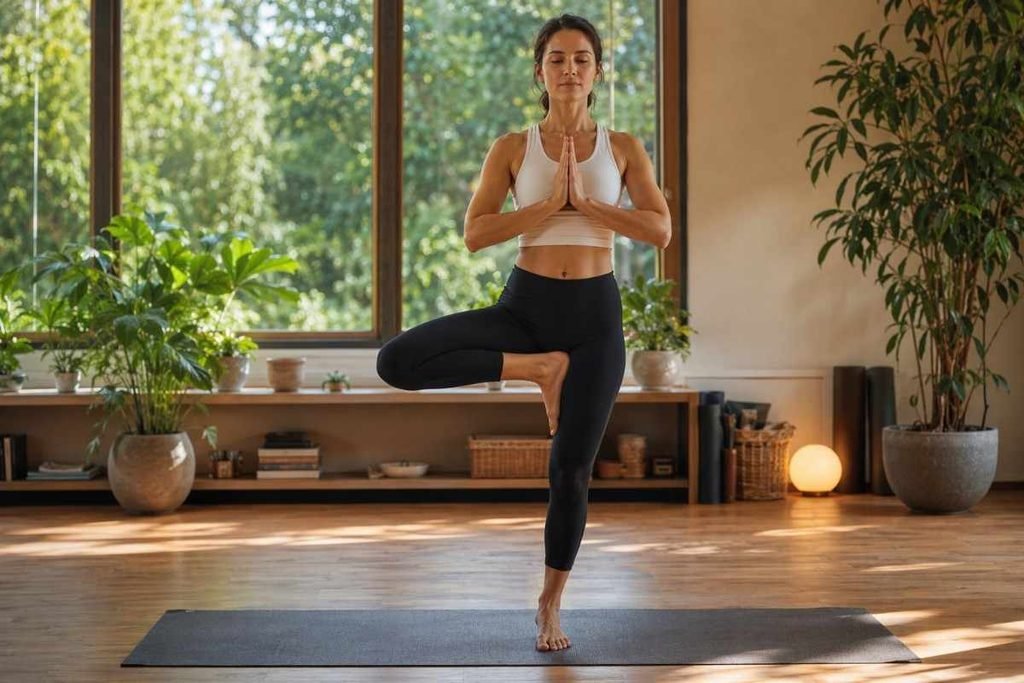
Tree pose is a standing yoga posture where you balance on one leg while the other foot presses into the inner side of the standing leg. Your torso stays upright, your steady gaze stays fixed, and your breath remains controlled. In yoga practice, it is often used to build standing balance and focus.
The pose is also called Vrksasana. The sanskrit word “vriksha” means tree. That name fits well because the shape of the posture reflects a rooted base and a lifted upper body. To understand the benefits of tree pose more clearly, it helps to look at its meaning and role in modern classes.
Origins and Symbolism of Tree Pose
Vrikshasana comes from the sanskrit word “vriksha,” which means tree. In this standing yoga posture, the body mirrors the image of a tree with a grounded base, a steady trunk, and lifted branches. That visual shape is one reason tree pose benefits has remained so well known across yoga practice.
Its symbolism is easy to connect with. A tree stands rooted yet flexible, and that same idea appears in the pose. You ground through the standing foot while lengthening upward through the spine and arms. Many people experience this as a sense of steadiness, growth, and calm body awareness.
A yoga teacher may also use tree pose to encourage stillness and centered attention. In that way, the symbolic benefits are practical too. The posture can help you feel more stable, present, and connected to your breath while holding balance in a simple but meaningful shape.
How Tree Pose Fits Into Modern Yoga Practice
In modern yoga, tree pose appears in many class styles because it is adaptable and easy to recognize. A yoga instructor may place it in the middle of yoga practice after warm-up movements, especially after Sun Salutations, when your hips and legs feel more open and ready for standing balance.
Still, tree pose is not limited to one part of class. It can also work near the beginning of a session or even as a standalone reset when you need stillness. Across different types of yoga, it serves as a useful balancing pose that trains focus, alignment, and breath control.
Its versatility also makes it useful for different skill levels. Beginners can place the lifted foot at the ankle and use wall support. More experienced students can raise the foot higher, lift the arms overhead, or try harder balance options. That flexibility is why tree pose fits so well into modern yoga.
Essential Steps to Perform Tree Pose
To practice tree pose, start standing upright with your feet together and a slight bend in the knees. Bring your hands to your hips or prayer position. Shift your body weight into one standing foot, then lift the other foot and open the bent knee out to the side.
Next, place the sole of the foot against the ankle, inner calf, or inner thigh of the standing leg, but not on the knee joint. Keep the spine tall and your gaze steady. You can leave the hands at the chest or raise them overhead. The next tips will help you refine this standing yoga posture.
Proper Alignment and Positioning Techniques
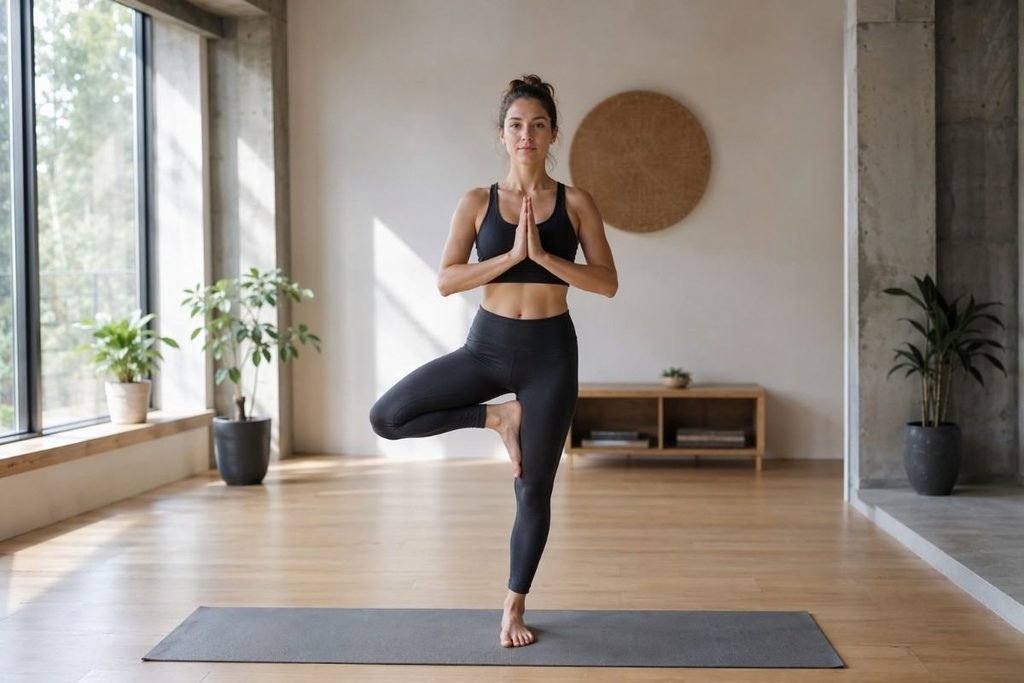
Good alignment makes tree pose benefits safer and more stable. Start by pressing evenly through the standing foot so your body weight does not collapse inward. Keep your spine long and your shoulders relaxed. This helps you feel grounded from the floor up.
The lifted foot should rest on the inner calf or inner thigh, never directly on the knee joint. Bring your palms together in anjali mudra at your chest, or raise the arms if balance allows. A steady gaze on a fixed point at eye level supports control and builds body awareness.
Use these positioning cues:
- Root down through the standing foot and spread your weight evenly.
- Place the lifted foot on the inner thigh or inner calf, not on the knee joint.
- Keep a steady gaze on one unmoving point.
- Lengthen upward through the crown of your head while breathing smoothly.
Common Mistakes When Practicing Tree Pose
Tree pose is suitable for beginners, but small mistakes can create balance issues. One of the most common is placing the foot on the knee joint. Whether your left foot is lifted or your right foot is lifted, the foot should always press into muscle, not bone.
Another problem is leaning too much into the standing side or looking around the room. Your main focus should be steady weight through the standing leg, soft breathing, and eyes fixed on one point. Holding your breath can also make the body tense and less stable.
Watch for these errors:
- Putting the right foot or left foot against the knee joint.
- Shifting too much body weight into one edge of the standing foot.
- Moving your eyes instead of keeping a fixed point.
- Forgetting to engage the core muscles while balancing.
Physical Benefits of Tree Pose
The benefits of tree pose benefits go beyond looking graceful in a yoga posture. This balancing pose trains the body to stabilize on one leg, which can improve control and coordination during daily physical activity. (300 hour yoga teacher training in Rishikesh) It also challenges the legs, feet, hips, and core muscles in a useful way.
With regular practice, many people notice better balance, stronger posture, and more lower body control. Because the pose combines breath, alignment, and muscle engagement, it supports both fitness and movement quality. The next sections break down the main physical effects more clearly.
Enhancing Balance and Stability
Tree pose improves balance by asking you to support your full body on one standing leg. That challenge trains your body to make small adjustments through the foot, ankle, and hip while staying upright. Over time, this can sharpen standing balance and reduce excessive swaying.
The pose also teaches stability through alignment. When you root through the standing leg, lift through the spine, and keep your gaze steady, your whole body works together. Core muscles help hold the torso up, while the lower body manages the shifting demands of balance in this standing yoga posture.
That combination is why tree pose can improve stability in a practical way. It develops coordination between the legs, trunk, and upper body. As regular practice builds confidence, you may notice better balance not only in yoga, but also in everyday movement and posture.
Improving Core Strength and Muscle Activation
Tree pose strengthens several areas at once. The standing leg works continuously to support body weight, while the lifted leg presses into the inner thigh or calf to create stability. This active connection increases muscle activation through the hips and legs.
Your core muscles also play a major part. The abdominal muscles help keep the torso upright and steady, especially when your arms lift overhead. In standing poses like this one, the body cannot rely on the floor for support, so the trunk has to organize itself with control.
That is why tree pose benefits is often linked to improved core strength. It engages the legs, ankles, feet, and hips while asking the midsection to stabilize the spine. With repeated practice, these combined efforts can make the pose feel lighter, stronger, and more controlled.
Mental and Emotional Benefits of Tree Pose
Tree pose supports more than physical control. Because it asks you to stay still, breathe steadily, and focus on one point, it can strengthen mindfulness and concentration. That mental shift often helps you feel more present during practice and less distracted by outside noise.
There is an emotional side too. Holding the pose, even for a few breaths, can create a real sense of accomplishment. Over time, tree pose may support emotional health and stress relief by helping you feel grounded, centered, and calmer in both body and mind.
Building Concentration and Mindfulness
Yes, tree pose can enhance mental focus because the posture gives your mind a clear job. You choose a fixed point in front of you and keep a steady gaze there. That visual anchor helps reduce wandering attention and supports concentration as you balance.
At the same time, the pose invites mindfulness. You notice where your weight is shifting, how your breath feels, and whether your shoulders or hips are tense. This sharpens body awareness in a direct, easy-to-understand way. The more present you are, the steadier the yoga posture often becomes.
That link between attention and movement is one of tree pose benefits strongest mental benefits. Instead of rushing, you learn to slow down and notice small details. With regular practice, this can improve focus, steadiness, and your ability to stay calm while managing challenge.
Stress Relief Through Tree Pose Practice
Tree pose may offer stress relief because it combines physical stillness with a steady breath. When you focus on balance and alignment, your attention often moves away from racing thoughts. That simple shift can make the practice feel calming and centering.
Its mindful practice also supports emotional health. Standing tall, breathing evenly, and holding yourself with control can create a grounded feeling. Many people find that this balancing pose helps ease physical tension and encourages a calmer mood after only a few breaths.
There is one caution, though. People with unstable blood pressure or high blood pressure should be careful, especially when raising the arms overhead. If you have concerns, use a gentler version and seek guidance. When practiced safely, tree pose benefits can be a helpful stress-management tool.
Tree Pose Variations and Modifications
Tree pose works well because it can change with your needs. In yoga practice, a yoga teacher may offer different variations based on your balance, hip mobility, or confidence. That makes standing tree pose benefits useful for beginners and experienced students alike.
Some people need more support. Others want a greater challenge. Both are valid. You can lower the lifted foot, keep the toes on the floor, or raise the arms and test longer holds. The next sections show how these changes can make tree pose more effective for your level.
Adapting Tree Pose for Beginners
Tree pose is beginner-friendly because it can be simplified without losing its value. Basic benefits include better balance, improved concentration, and stronger awareness of how your body weight shifts. If balance poses feel intimidating, start small and give yourself support.
A yoga mat can help with grip, and wall support or a chair can make the posture feel much safer. Instead of lifting the foot high, place the toes on the floor like a kickstand and rest the heel near the standing ankle. Whether your right foot or left foot is lifted, keep the setup easy.
Try these beginner options:
- Use wall support with one hand for stability.
- Keep the toes of the lifted foot on the yoga mat.
- Place the foot at the ankle instead of the calf or thigh.
- Hold the pose for only a few breaths before switching sides.
Advanced Modifications for Experienced Yogis
Once the basic shape feels steady, advanced modifications can deepen the challenge. In a standing balance posture, even small changes increase the demand on focus, muscle control, and breath. That is why tree pose benefits often appears in yoga teacher training as a test of precision.
You might move from anjali mudra at the chest to arms overhead, hold longer, or explore less visual support. Some variations also change where the lifted leg rests, creating a different alignment challenge while keeping the hip open and the spine tall.
Experienced yogis may try:
- Raising the arms overhead instead of staying in anjali mudra.
- Holding the pose for a longer time on each side.
- Closing the eyes to remove the visual anchor.
- Moving the lifted leg into a different open-hip position for added control.
Precautions and Risks Associated with Practicing Tree Pose
Standing tree pose is generally simple, but it still comes with precautions. Avoid pressing the lifted foot directly into the knee joint, since that can create strain. If the hip joint feels tight or painful, do not force the bent leg higher. A stable, non-slip surface matters too, especially if you are new to balancing. Warm up first, and use wall support if needed.
Certain conditions call for extra care. People with vertigo, migraine, arthritis, insomnia, or existing musculoskeletal injuries should avoid the pose or practice only with a yoga instructor. Those with high blood pressure or unstable blood pressure should also be cautious, especially with arms overhead. If pain appears, stop. In a medical emergency, seek immediate medical care rather than trying to practice through symptoms.
Best Time and Frequency for Tree Pose Practice
For many people, the best time for tree pose benefits is early in the morning on an empty stomach. That timing can help you feel alert, light, and ready to focus. If mornings do not work, the pose can also fit into evening yoga practice. Just avoid doing it right after a heavy meal. A gap of about four to six hours after eating is helpful.
As for frequency, consistency matters more than intensity. Regular practice helps your standing leg adapt to supporting body weight with more control. You do not need very long sessions. Even a few rounds on each side can make this yoga posture more familiar and steady. Stay within your comfort level, breathe normally, and build your hold time gradually as balance improves.
Common Mistakes and Troubleshooting Tree Pose
A few common mistakes can make tree pose benefits feel harder than it needs to be. The biggest one is placing the lifted foot on the knee joint instead of the inner calf or thigh. Another is collapsing into one side of the standing foot. When that happens, balance issues increase quickly. Looking around the room can also throw you off because your visual focus keeps shifting.
If the pose feels shaky, go back to the basics. Root evenly through the standing foot, choose one fixed point at eye level, and keep a steady breath. Do not rush to lift the foot higher. A lower placement is often more stable and still effective. If you keep losing balance, use a wall and shorten the hold. Small corrections usually bring the pose back under control.
Preparatory Yoga Poses for Tree Pose
Some preparatory yoga poses can make tree pose feel more accessible. Child’s pose helps relax the hips and soften the body before balancing. Supine twist and supine butterfly can also release tension around the hips, which is useful when one leg opens out to the side in tree pose benefits. Reclined pigeon offers even more support while stretching the hip area.
Mountain pose is especially helpful because it teaches grounding, alignment, and mindful breathing before moving into a standing yoga posture on one leg. In a yoga sequence, these poses prepare both the body and the mind. They help you feel more rooted through the feet, more upright through the spine, and more ready to manage balance without rushing into the posture.
Materials Required for Tree Pose Practice
Tree pose does not require special equipment, which is one reason it is so approachable. For most people, a yoga mat is enough. It gives you grip on a non-slippery surface and helps the standing foot feel more secure. Bare feet are best so the soles can connect directly with the floor. Comfortable clothing also helps you move without restriction.
If you are working on standing balance, wall support or a chair can be useful in early practice. These tools are not signs of weakness. They simply make the pose safer while you develop confidence and body awareness. Beyond that, all you really need is a quiet space, a steady gaze on a fixed point, and a few slow breaths to settle into your yoga practice.
Duration and Hold Time for Tree Pose
A practical starting point is to hold tree pose for three to five breaths on each side. Some people may stay in the posture for 10 to 30 seconds, depending on comfort and experience. The goal is not to force a long hold. It is better to stay steady for a short time than to wobble through a longer one with poor alignment.
As regular practice builds confidence, you can hold tree pose benefits a little longer. Keep a steady breath and let the standing leg support your body weight without gripping too hard. If your focus fades or your shape starts to collapse, come out and reset. A yoga teacher may suggest longer holds for experienced students, but control and ease should always come before duration.
Tree Pose and Health Insurance (Special Considerations)
Tree pose can be part of a broader wellness routine, but it does not directly change your health insurance premium or guarantee lower costs. The benefits of tree pose benefits may support balance, strength, and mindfulness, yet insurance decisions depend on policy terms set by the insurer. Some plans may include wellness programs or rewards for healthy activities, but those details vary.
It is also important to keep expectations realistic. A yoga posture can support preventive habits, but it does not replace medical care or insurance protection during a medical emergency. (mountain pose mistakes) If you want to know whether a plan includes wellness-related perks, always review the exact policy terms.
| Topic | What to Know |
|---|---|
| Health insurance premiums | Not directly determined by practicing tree pose |
| Wellness rewards | May be available in some plans, depending on policy terms |
| Preventive value | Yoga can support healthy habits as part of a wider routine |
| Medical emergency needs | Yoga does not replace insurance coverage or urgent medical care |
Symbolic and Cultural Meaning of Tree Pose
Tree pose carries clear symbolism that many people connect with right away. The sanskrit word behind the pose means tree, and the body shape reflects that image well. One foot roots into the floor while the upper body rises with length and steadiness. This can suggest growth, grounding, and balance held at the same time.
Its cultural meaning in yoga also comes through in how a yoga teacher presents it. The posture is often used to remind students that strength does not have to look rigid. Like a tree, you can be stable and still adaptable. That idea gives tree pose benefits lasting value beyond exercise alone. Its symbolism supports body awareness, focus, and a simple feeling of being centered.
Struggles with Balance: Practical Troubleshooting for Beginners
If you are dealing with balance issues, you are not doing anything wrong. Tree pose naturally exposes side-to-side differences, and many people feel stronger on one standing leg than the other. Start by lowering the foot placement. Rest the lifted foot at the ankle or inner calf instead of forcing it higher. That change alone can make the pose feel much more stable.
Another useful fix is to simplify your setup. Choose a fixed point at eye level and keep your eyes there the whole time. Use wall support with one hand if needed. You can also keep the toes of the lifted foot lightly on the floor like a kickstand. These beginner changes still train balance, but they reduce fear and help you build control step by step.
Tree Pose for Non-Yoga Practitioners and Alternative Applications
You do not need a full yoga background to benefit from tree pose. At its core, it is a simple standing balance exercise that improves body awareness, posture, and concentration. If you enjoy walking, strength work, or other physical activity, this pose can still add value by training control on one leg and teaching you how your weight shifts.
That makes tree pose benefits useful beyond formal classes. It can serve as a brief reset during the day, a warm-up before movement, or a balance drill after other exercise. These alternative applications are practical because the pose needs very little space or equipment. Even outside yoga, it can help you practice steadiness, breath control, and a calmer mental state.
Pathway to Becoming a Professional Yoga Teacher through Tree Pose Mastery
Mastering tree pose benefits will not make someone a yoga teacher on its own, but it does build useful skills for that path. The pose teaches alignment, observation, breath awareness, and clear cueing. Because it is a standing balance posture, it also shows how small adjustments can change stability in a big way. Those lessons matter in teaching.
In yoga teacher training, tree pose is often a good example of how to guide students with different needs. A future yoga teacher learns how to offer modifications, notice unsafe foot placement, and explain the role of focus and posture in a simple way. True mastery is not only holding the pose well. It is understanding how to practice it safely, adapt it clearly, and teach it with confidence.
Emotional Resilience and Stress Management via Tree Pose
Tree pose can support emotional resilience because it asks you to stay steady while managing challenge. You may wobble, lose balance, and try again. That process teaches patience without needing dramatic effort. Over time, this can build confidence and a stronger sense of control when things feel unsteady.
For stress management, the pose works through attention and breath. A few rounds of tree pose benefits with regular practice can help shift your focus away from mental clutter and back into the body. That simple change may support emotional health and help you feel more centered. It is not a cure for stress, but it can be a practical tool for creating calm, focus, and a quiet sense of accomplishment.
Conclusion
In conclusion, the Tree Pose (Vrksasana) is more than just a foundational yoga posture; it serves as a powerful tool for cultivating both physical and mental well-being. By enhancing balance, improving core strength, and fostering mindfulness, tree pose benefits offers holistic benefits that can transform your yoga practice and daily life. Remember to approach this pose with patience and awareness, allowing yourself to grow stronger and more centered over time. Whether you’re a seasoned yogi or just starting out, incorporating tree pose benefits into your routine can lead to greater emotional resilience and stress management. If you’re interested in deepening your practice or exploring yoga further, don’t hesitate to reach out for a free consultation and let’s embark on this journey together!
Frequently Asked Questions
Tree pose is not ideal for everyone without changes. This yoga posture may need modification if you have balance issues, an injury, or concerns around the knee joint. People with high blood pressure should be cautious, especially with arms overhead, and may benefit from guidance or support.
Tree pose activates the standing leg, ankles, feet, hips, and core muscles. The abdominal muscles help keep the torso upright, while the lifted leg presses into the inner thigh or calf to create stability. Together, these areas work to support balance and posture.
Yes, tree pose may help improve posture and spinal alignment because it encourages an upright spine, relaxed shoulders, and controlled balance. A steady gaze also supports the posture by reducing unnecessary movement. With regular practice, it can increase postural awareness and better body positioning.
Tree pose, or vrikshasana, is a standing yoga posture done on one leg with the other foot placed against the inner leg. The benefits of tree pose include better balance, focus, and lower body strength. A yoga teacher may also use it to improve body awareness.
The benefits of vrikshasana include improved balance, stronger core muscles, better concentration, and greater mindfulness. As a standing yoga posture, it also supports posture, lower body control, and coordination. Many people use it to feel more grounded, steady, and focused during practice.
Tree pose symbolism is tied to growth, grounding, and steadiness. The shape reflects a rooted base and a lifted upper body, much like a tree. This idea can support body awareness and standing balance while reminding you to stay stable without becoming rigid.
Yes, tree pose is good for beginners because it can be adjusted easily. Among balance poses, it is one of the most accessible. Wall support, lower foot placement, and a mindful practice approach help new students build confidence, focus, and basic balance safely.
The main physical benefits of tree pose include better balance, stronger core muscles, improved lower body control, and sharper coordination. Because it asks one leg to manage body weight steadily, it can also support posture and movement quality during yoga and everyday physical activity.
Tree pose improves balance by training the standing leg to support the body while the lifted foot presses into the inner thigh or calf. This creates active stability. Over time, it builds standing balance, postural awareness, and better coordination across the feet, hips, and trunk.
Yes, tree pose can improve mental focus because you keep a steady gaze on one fixed point while controlling your breath and balance. That combination encourages mindfulness and concentration. It gives your attention one clear task, which helps reduce distraction and sharpen awareness.
[…] English […]