

Key Highlights
- Mountain pose looks simple, but common mountain pose mistakes can weaken proper alignment and reduce its value in yoga postures.
- In 200 hour yoga teacher training, mountain pose teaches body awareness and helps you build a strong base.
- Small errors like locked knees, slouched shoulders, and uneven weight can affect balance and comfort.
- Steady breath and mindful attention help you correct posture safely.
- Mountain pose offers practical physical and mental benefits when practiced with care.
- Props, clothing, and the right setup can make learning easier.
Introduction
Mountain pose is often the first standing position you learn, yet it is one of the most revealing parts of a yoga practice. At first glance, it may seem like you are just standing still. In reality, this asks for body awareness, steady breath, and careful attention from your feet to the crown of your head. When you understand the usual errors in mountain pose, you can improve comfort, posture, and confidence in every class.
The Importance of Mountain Pose in 200 Hour Yoga Teacher Training
In 200 Hour Yoga Teacher Training in Rishikesh , mountain pose is treated as a foundational – because it supports many other standing postures. It teaches you how to organize your body alignment with care instead of rushing into the shape.
That matters because alignment in mountain pose creates a strong foundation for movement, breath, and balance. As one of the essential yoga poses, it helps you feel how the entire body works together before you move deeper into yoga sequences or compare a 100 hour vs 200 hour yoga ttc path.
Why Proper Alignment Matters for Beginners
For beginners, proper alignment matters because mountain pose trains you to stand well before you do more complex standing postures. Good body alignment helps distribute weight evenly through both feet and reduces unnecessary pressure on the back and neck. It also improves your sense of stability.
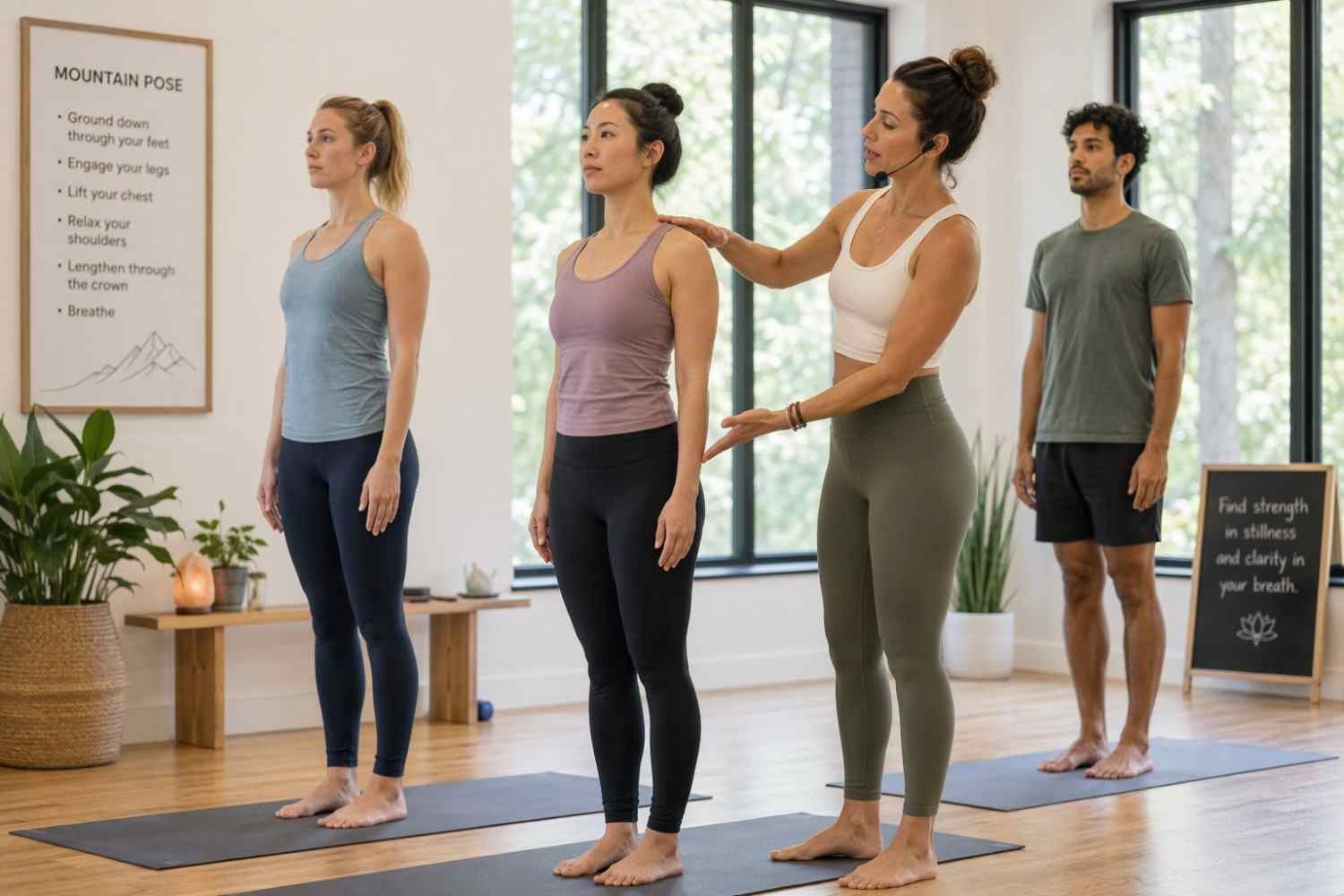
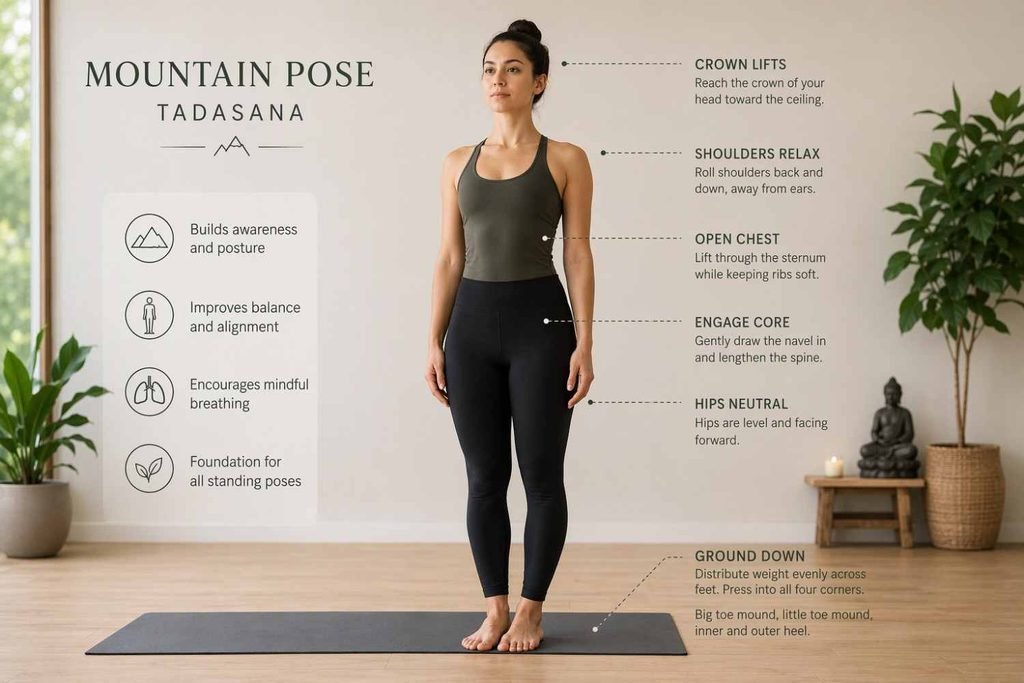
A simple proper technique starts with standing tall on your yoga mat with feet together or slightly apart, toes pointing forward. Let your arms rest by your sides, soften your shoulders, and keep your chin parallel to the floor. Then lengthen from the tailbone through the crown of the head.
As you settle in, open the chest gently and draw the abdomen in without forcing. This teaches body control, better posture, and safer habits from the start. That is why beginners in yoga teacher training spend time on details that might look basic but are not.
How Mountain Pose Sets the Foundation for Advanced Postures
Mountain pose is a foundational yoga posture because it teaches you how to stack the body clearly from feet to head. When that structure is steady, transitions into other yoga sequences become more controlled. You are not guessing where your weight should go.
As you learn to ground through the feet and lift upward through the spine, you build better balance and coordination. This improves stability is that follow, especially other standing shapes. Even a small action, like feeling equal pressure through both feet, can sharpen control.
That is one reason mountain pose helps improve balance and stability. It builds a strong foundation before advanced postures ask more of your legs, spine, and focus. If you want clean movement later, this is where it begins. The next step is spotting the mountain pose mistakes that interfere with that base.
Most Common Mountain Pose Mistakes to Watch For
Many students make the same common mountain pose mistakes because the standing position seems easy. They rush into it, misalign the body axis, tense the shoulders and neck, or forget to breathe steadily.
These habits can lead to poor posture and make other yoga postures feel less stable. Locked knees and a rounded spine are two major issues to watch for. When you notice them early, correction becomes much easier. Let’s look at each one more closely so you can stand with more ease and precision.

Overextending or Locking the Knees
Locking the knees is a common habit in any standing pose, and it can make mountain pose feel stiff instead of grounded. When you force the knee joints straight, the body often shifts out of proper alignment. That can reduce comfort and make balance less steady.
Instead, think about standing tall without hardening the legs. Keep weight even through the feet, and notice whether you are dumping pressure into the heels or gripping through the balls of the feet. A balanced base gives the legs a more natural job.
Try these simple tips:
- Soften the knees slightly rather than pushing them backward.
- Spread weight evenly across both feet.
- Check if your thighs and hips feel relaxed, not rigid.
These cues help you stop forcing straight legs and create a steadier standing for longer holds.
Rounding the Spine and Slouching Shoulders
Rounding the spine and letting the shoulders slump forward can make mountain pose lose its shape. In yoga practice, this often happens when you stand without awareness or rush to copy the outer form. The result is weaker spinal alignment and more tension in the upper body.
To avoid it, lengthen upward through the crown of your head while keeping the chin level. Let the shoulder blades settle down the back instead of lifting toward the ears. Your goal is a neutral spine, not a forced chest lift or a dramatic arch.
Use these reminders:
- Lift through the crown while keeping the ribs calm.
- Relax the neck and upper shoulders.
- Let the arms hang naturally at your sides.
These small shifts help your back feel longer, your chest more open, and your posture more stable.
How to Correct Posture and Improve Alignment in Mountain Pose
Correcting bad posture in mountain pose starts with slowing down. Instead of moving automatically, take a breath and scan your feet, hips, spine, shoulders, and head. This simple pause builds body awareness and makes correct alignment easier to find.
You also want to pair structure with mindful breathing. In many yoga postures, breath helps release extra tension that blocks good form. When you stand with attention and steady air flow, the becomes clearer. From here, it helps to focus on muscular support and mental steadiness together.
Engaging Muscles Without Forcing the Body
Mountain pose should feel active but not harsh. In yoga practice, you want the major muscle groups to wake up without turning the into a strain. Gentle engagement helps the shape feel supported from the feet upward.
Start by grounding your feet evenly and lightly drawing in the abdominal muscles. Open the chest moderately, keep the neck straight, and let the arms stay natural. This creates connection through the entire body without gripping or overworking. You are organizing the pose, not bracing against it.
Yes, improper mountain pose technique can cause discomfort. If you tense the body, hold your breath, or push yourself into a rigid stance, the neck, lower back, or legs may feel strained. The fix is simple: reduce force, return to balanced effort, and let alignment guide the work.
Using Breath and Mindfulness for Better Practice
Breath changes the quality of mountain pose right away. When you take deep breaths instead of holding the air, the body settles and the becomes easier to maintain. During any yoga session, this can improve steadiness and reduce hidden tension.
Mentally, focus on calm attention. Notice your feet, the lift of your spine, and the rise of the crown of your head. Mindful breathing supports mental benefits such as improved concentration and a quieter mental state. You do not need to think about many things at once.
Try focusing on these points:
- Keep natural breathing smooth and even.
- Feel the body lengthen on each inhale.
- Soften extra tension on each exhale.
- Stay present with one clear cue at a time.
This approach makes feel more grounded, stable, and useful.
Health Benefits of Mountain Pose
The health mountain pose benefits are broader than many people expect. This foundational standing position helps improve posture and stability by teaching you to distribute weight evenly through the feet while keeping the spine aligned. That can reduce pressure on the back and neck and support pain relief, including less stress around the sciatic area. It also encourages better breathing efficiency by keeping the chest open and the body upright.
There is also a positive impact on mental health. When you hold with steady breathing and body awareness, it can calm the mind, improve concentration, and support emotional balance through the nervous system. Many students notice more alertness and energy as well. These benefits explain why the posture is valuable on its own, not just as a transition between yoga poses.
Variations of Mountain Pose (Standing vs. Lying Down)
Mountain pose has more than one useful form. The standard standing is the version most people know, but a lying down variation can also help you understand length, breath, and alignment. Both are practiced on a yoga mat and offer practical benefits depending on your comfort level, energy, and needs that day.
You could say is underrated because people often overlook its quieter versions. Yet each one teaches awareness in a different way.
| Variation | How It Is Done | Practical Benefits |
|---|---|---|
| Standing Mountain Pose | Stand tall with feet together or slightly apart, arms by sides or raised, spine long, gaze forward | Builds posture, balance, and readiness for other standing yoga postures |
| Lying Down Mountain Pose | Lie flat, extend legs, raise arms overhead, stretch from fingers to toes, breathe deeply | Helps you feel length through the body with less balance demand |
Precautions When Practicing Mountain Pose
Simple, but that does not mean it suits every moment or every body in the same way. Your health condition matters. If you feel dizzy, have a headache, or are dealing with prolonged insomnia, it may be better to pause and rest instead of practicing through discomfort.
A few basic precautions can keep the safer:
- If you have a history of low blood pressure, be careful and consider professional guidance.
- Pregnant women should prioritize stability and keep the feet wider for balance.
- Stop if you feel pain, numbness, or dizziness.
- Maintain steady, natural breathing rather than holding the breath.
These steps help you respect your body while still getting the benefits. Safety always comes before trying to hold perfect form.
Recommended Clothing and Accessories for Mountain Pose
What you wear can affect how clearly you feel your alignment. Proper attire should let you move without pulling, sliding, or overheating. Stretchy leggings or yoga pants and a fitted top can make it easier to notice what your hips, spine, and shoulders are doing. That matters for beginners who are still learning how good posture feels.
Helpful choices include:
- Breathable leggings, such as a high waist double knot style, for support without restriction
- A fitted tank or long-sleeve top for free arm movement
- A stable yoga mat to reduce slipping
These small choices can prevent bad alignment by reducing distractions. When your clothing stays in place and your mat feels secure, it becomes much easier to focus on your standing position and body awareness.
Recommended Products for Practicing Mountain Pose
You do not need much equipment for mountain pose, but the right products can support safer practice. A yoga mat with grip and a mat of moderate thickness helps cushion the feet while still letting you feel the floor. That is useful when you are learning how to ground evenly through the heels and balls of the feet.
A few practical tools stand out:
- A non-slip yoga mat for steadier footing
- Yoga blocks to help sense thigh and hip alignment
- A yoga strap for gentle stretching in related practice
These products are not about making harder. They help you feel the more clearly. Potentially harmful yoga poses are usually the ones done without attention, control, or respect for your current condition, and the same rule applies even in a basic stance.
Mountain Pose Mistakes for Different Body Types
Mountain pose should match your body, not force your body to match one narrow shape. Your fitness level, balance, and current comfort can affect how the feels. Some people stand better with feet together, while others need a little space between the feet to find steadiness. Both can support good body alignment when done with care.
The most common mountain pose mistakes still show up across body types: rushing in, misaligning the body axis, tightening the shoulders and neck, or breathing poorly. The answer is not to copy someone else’s stance. It is to adjust thoughtfully and look for correct alignment in your own standing position. That is especially important if you are comparing beginner paths like a 100 hour vs 200 hour yoga ttc and trying to build reliable fundamentals.
Psychological Barriers and Mindset Mountain Pose Mistakes
Sometimes the biggest mountain pose mistakes is mental, not physical. Because the posture looks plain, you may stop paying attention too soon or assume nothing important is happening. That mental state can make the body dull, distracted, or overly tense. Instead of presence, you get automatic movement.
A better focus is simple awareness. Feel your feet on the floor, notice your breath, and track the line of the spine. This steady attention has a positive impact on the nervous system and often brings better stability. mountain pose mistakes does not ask for dramatic effort. It asks for clear focus. If you stay with the essentials, the can calm the mind and sharpen concentration at the same time.
Feeling Wobbly or Unstable in Mountain Pose: Causes and Solutions
Feeling wobbly in mountain pose is common, especially in early yoga classes. Often the cause is uneven weight distribution, rushed setup, or hidden tension in the legs and shoulders. If your body axis is off, your balance will feel uncertain even if the looks correct from the outside.
To improve your sense of stability, return to the feet first:
- Spread weight evenly through the whole foot, not only the heels or balls of your feet
- Relax the shoulders and neck
- Slow the breath and pause before adjusting
Helps improve balance and stability by teaching you where your center is. When your feet root down and your spine lengthens up, the body has a clearer line to organize around. That makes stillness easier to hold.
What Should You Be Feeling in Mountain Pose? Sensations and Awareness
In mountain pose, you should feel alert, grounded, and gently lifted. The feet press into the floor while the spine lengthens upward. There should be light support through the abdominal muscles, an open chest, and a sense that the body is both steady and easy. You are not trying to feel rigid. You are trying to feel organized.
Your attention can move from the feet to the crown of your head. Notice whether your breath stays smooth and whether both sides of the body feel equally involved. This kind of body awareness improves better balance over time because you start recognizing small shifts before they become larger problems. Mentally, focus on steadiness, breath, and the feeling of upward length rather than on trying to look perfect.
Contraindications and Who Should Avoid Mountain Pose
Mountain pose is widely used, but some people should be cautious or avoid it in certain moments. If a current health condition makes standing feel unsafe, the may need to be modified or skipped. The goal is never to push through warning signs just because the posture seems basic.
Use extra care if any of these apply:
- You are experiencing dizziness, headache, or numbness
- You have low blood pressure or use medication that affects stability
- Pregnant women need a wider stance and strong attention to balance
These are not reasons to fear. They are reminders to practice wisely. If standing feels unsteady, choose a variation that better fits your condition and keeps the body supported.
Potential Risks and Disadvantages of Holding Mountain Pose Too Long
Mountain pose is helpful, but holding any posture too long with weak alignment can create problems. One of the main disadvantages of appears when you stay in it while locking the knees, tightening the neck, or collapsing into poor posture. Instead of pain relief, you may create more strain in the lower back, legs, or shoulders.
Watch for these signs:
- Breath becomes shallow or held
- The body feels rigid rather than steady
- Discomfort builds in the back, knees, or neck
So yes, improper technique can cause discomfort or injury over time. The answer is not to avoid the completely. It is to shorten the hold, reset your alignment, and practice with steady breathing and less force.
Myths and Controversies: Is Mountain Pose Really a Yoga Pose?
Some people question whether mountain pose really counts as a yoga pose because it looks like ordinary standing. That idea misses what yoga practice is asking for. In this setting, standing is not passive. It becomes a deliberate foundational that teaches awareness, breath, and correct alignment.
Here is why it matters:
- It prepares the body for many other yoga postures
- It improves posture and balance through active attention
- It connects breath with structure in a clear, simple way
So yes, often underrated compared to flashier postures. Its value is not in how dramatic it looks. Its value is in how much it teaches when you slow down enough to notice what the body is doing.
Conclusion
In conclusion, mastering the Mountain Pose is essential not just for beginners but also for advanced practitioners in yoga. By focusing on proper alignment and understanding the common mountain pose mistakes, you can significantly enhance your practice and reap the numerous health benefits this foundational offers. Remember, engaging your muscles mindfully while using your breath can make all the difference. Whether you’re practicing for flexibility, stability, or overall wellness, being aware of the psychological barriers and physical limitations can help you progress effectively. If you’re eager to deepen your understanding and refine your skills, consider joining our upcoming yoga teacher training. Embrace the journey to better alignment and a more fulfilling practice!
Frequently Asked Questions
Yes, poor posture, locked knees, or a tense chest can place extra stress on the lower back. In yoga practice, proper alignment and steady breathing help reduce that strain. If discomfort appears, shorten the hold, reset your stance, and stand with less force.
Start slowly and check your standing position before moving on. Keep weight even through both feet, relax your shoulders, and lengthen upward through the head. In yoga teacher training, these basics build proper alignment and good posture that carry into many other yoga postures.
Mountain pose and tree pose support balance and stability in different ways. Mountain pose teaches even grounding and body organization, while tree pose adds a stronger single-leg challenge. Both matter in yoga postures, and many tree pose benefits depend on the steady foundation first learned in mountain pose.
Potentially harmful yoga are usually the ones practiced with poor technique or without respect for your health condition. Even mountain pose can carry risk if you ignore dizziness, numbness, or strain. Pain relief comes from mindful practice, not from pushing through warning signs.
In mountain pose, avoid common mountain pose mistakessuch as rushing into the shape, locking the knees, slouching the shoulders, misaligning the body axis, and holding your breath. These habits create poor posture. In yoga practice, correct alignment begins with slowing down and paying attention.
People with dizziness, headaches, numbness, or another unstable health condition should be cautious with mountain pose. Those with low blood pressure may need guidance. Pregnant women can practice with precaution, using a wider stance for balance and stopping if they feel uncomfortable.
Stand tall with feet together or slightly apart, toes forward, and arms by your sides. Distribute weight evenly, relax the shoulders, keep the chin level, and lengthen through the spine. In yoga practice, proper technique means calm breath and steady body alignment, not stiffness.
The disadvantages of mountain pose show up when you hold it too long with poor posture or tension. Then the pose can create discomfort instead of pain relief. Its practical benefits depend on good alignment, steady breathing, and knowing when to reset rather than forcing stillness.
The hardest yoga depend on your fitness level and experience. Flashier standing postures may look harder than mountain pose, but holding mountain pose with full attention is more challenging than many expect. Its health benefits come from precision, patience, and steady awareness.
The most common mountain pose mistakes are rushing in, locking the knees, rounding the spine, tensing the shoulders and neck, and forgetting to breathe. These errors affect body alignment and posture. In yoga practice, slowing down helps you catch and correct them early.