

Key Highlights
- Back pain and lower back pain often improve with gentle movement, not complete rest.
- Several yoga poses support pain relief by easing stiffness and improving range of motion.
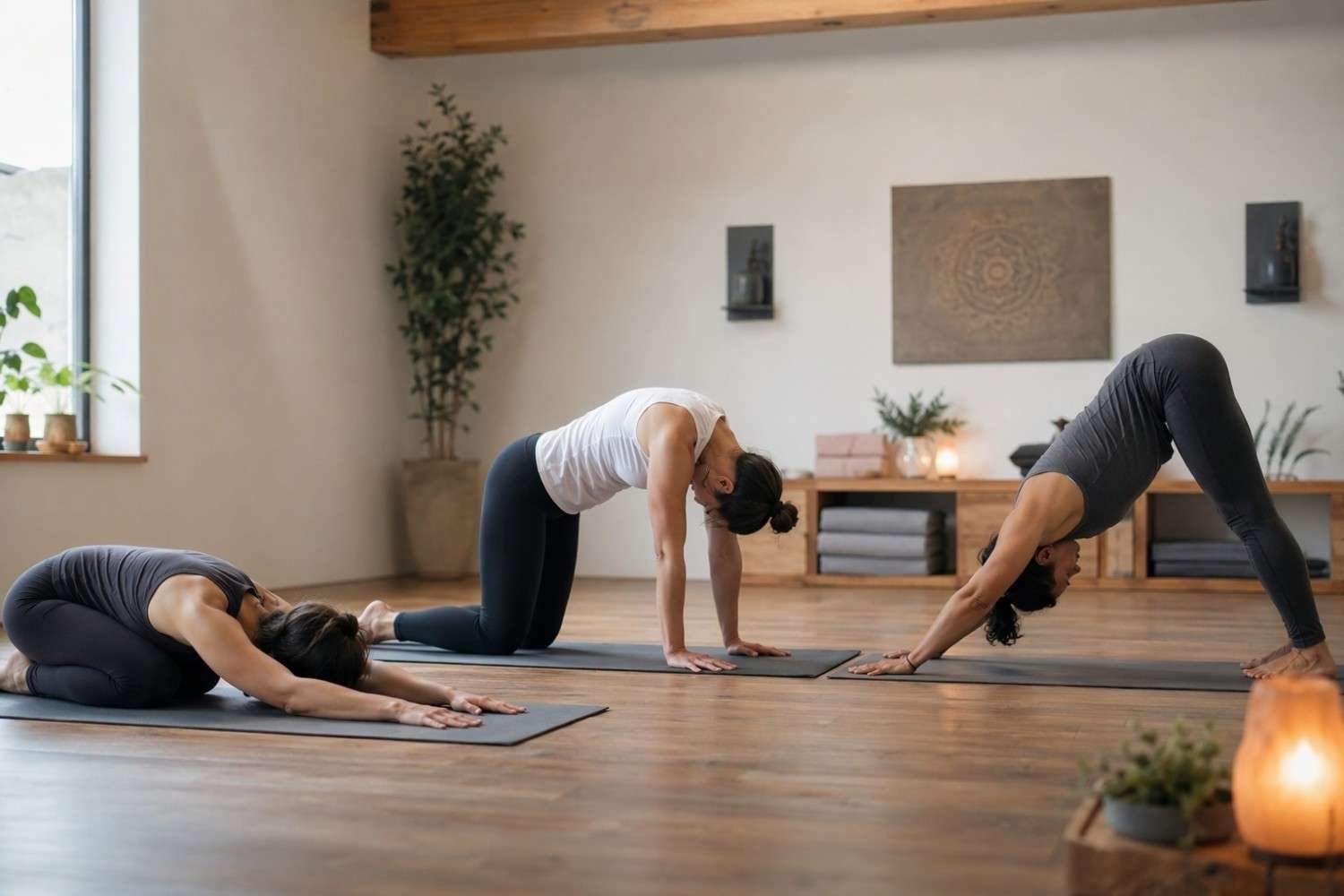
- Child’s Pose, Cat-Cow, Downward-Facing Dog, and Sphinx Pose are common starting points.
- A careful yoga practice can work well alongside physical therapy and other guided exercise plans.
- Safe form, slow pacing, and simple modifications matter if you have chronic pain.
- You can also combine yoga with strengthening drills like bridges and mobility work.
Introduction
Yoga for Back Pain can make ordinary tasks feel harder than they should. Sitting, bending, or even getting out of bed may bring discomfort. The good news is that gentle yoga poses can support pain relief in a simple, natural way. With the right approach, yoga can help loosen tight areas, improve movement, and support your back muscles. If you want an easy place to start, this guide walks you through safe options and practical tips you can use right away.
Understanding Back Pain and Yoga
Back pain is common in people of many ages. Lower back pain often shows up after long sitting, poor sitting habits, stress, strain, or reduced movement. That discomfort can limit your daily routine and affect how freely you move.
Yoga exercises may help because they combine gentle stretches, breathing, movement, and strength work. This holistic approach can support pain relief, improve flexibility, and help your body move with less stiffness. In many cases, yoga also fits well beside physical therapy as part of a broader back care plan.
How Yoga Supports Spinal Health
Your spine needs both mobility and support. Yoga for Back Pain helps by using spinal yoga stretches and controlled physical postures that encourage movement through the back in a steady way. When you practice regularly, tight areas may feel less restricted, and that can lead to meaningful pain relief.
Just as important, yoga works on the muscles around the spine. Stronger back muscles and better core support help distribute load more evenly. That may improve posture correction and reduce general discomfort linked to stiffness or poor movement habits.
Another benefit is body awareness. You begin to notice when you are moving into a painful position or rushing with fast movements. That awareness can help you protect your back during exercise and in everyday life. The next point is whether this also helps with lower back pain specifically.
Can Yoga Relieve Lower Back Pain?
Yes, yoga may help relieve lower back pain for many people when it is done carefully and consistently. The main reason is simple: it can stretch tight tissue, build support around the spine, and improve how your body moves. Over time, that may lower pain intensity and improve daily function.
Yoga can also complement physical therapy. Both approaches often focus on control, gradual progress, and safer movement patterns. Some people may notice a sense of relief with regular practice, even if the change builds slowly rather than all at once.
- Gentle movement may reduce stiffness and muscular tension.
- Better strength and alignment may improve support in the lower back.
- Progress should feel steady, even if it does not reach a minimal clinically important difference right away.
Safety Practices When Doing Yoga for Back Pain
If you want back pain relief, start slowly and stay honest about what you feel. Do not force any stretch, and stop right away if you get sharp pain. Slow breathing and controlled movement are safer than pushing deeper into a pose.
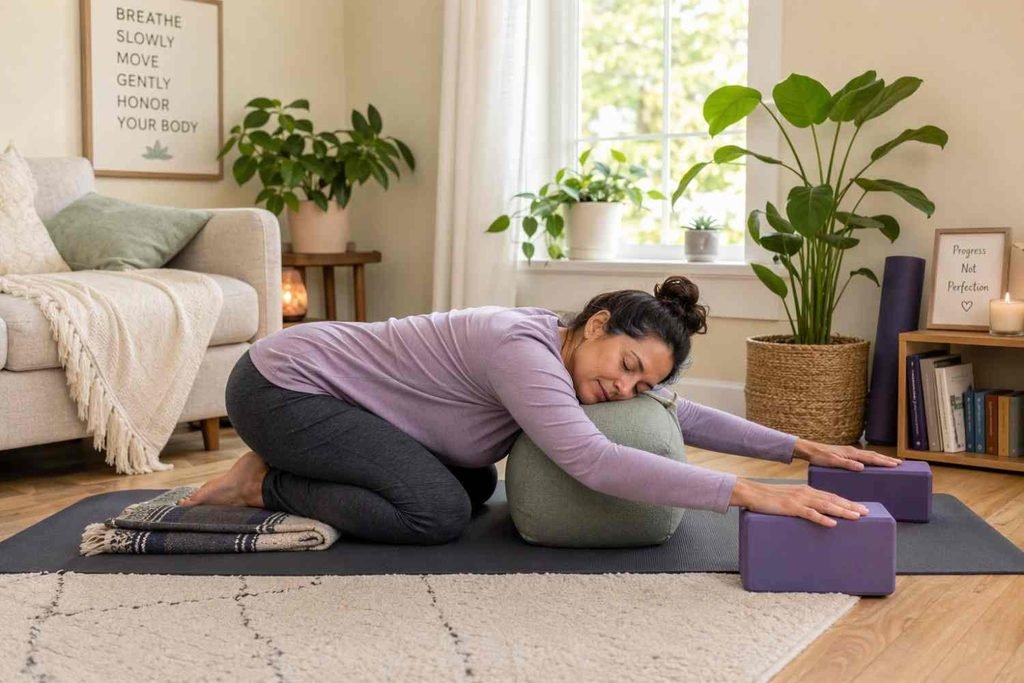
For chronic pain, support matters. Use blocks, cushions, or straps if needed, and focus on proper alignment rather than depth. If you are unsure what is safe for your body, talk with a physical therapist or other healthcare professional before moving into a regular routine.
Adjustments and Modifications for Beginners
Starting yoga practice with back pain does not mean you need advanced shapes. In fact, beginners usually do better with gentle stretches and short holds. The goal is pain relief, not intensity. You want to wake up the lower back muscles and improve movement without irritation.
Simple modifications can make poses more comfortable. For example, you can reduce range of motion, place padding under the knees, or shorten how long you stay in a position. These small changes often help you build confidence and stay consistent.
- Keep movements slow and controlled instead of using momentum.
- Use yoga blocks, cushions, or straps to reduce strain.
- Ease out if you feel pressure, pinching, or rising discomfort.
Poses to Avoid with Chronic Back Pain
With chronic back pain, the safest choice is to avoid any pose that clearly worsens symptoms. That includes physical postures that create sharp pain, compression, or strain. A forward bend may feel fine for one person but become a painful position for another, so your response matters more than the pose name.
It also helps to avoid fast movements and sudden transitions. When you rush, you are more likely to lose alignment and load the spine poorly. Yoga for Back Pain should feel controlled and steady, especially if you have a history of chronic low back pain.
- Skip any posture that causes sharp, spreading, or worsening pain.
- Be cautious with deep forward bend positions if they increase symptoms.
- Avoid forcing range of motion just to match a class or video.
7 Essential Yoga Poses for Back Pain Relief
Many people ask about the best yoga poses for back pain relief. A strong starting list includes Child’s Pose, Cat-Cow, Downward-Facing Dog, Sphinx Pose, Cobra Pose, Bridge Pose, and Supine Twist. These yoga exercises target stiffness, posture, and support.
Some are more restorative, while others build strength or improve mobility. That balance is one reason Yoga for Back Pain can pair well with physical therapy. Below, you will find the first four poses in detail, including how they may help your back feel and move better.
1. Child’s Pose (Balasana)
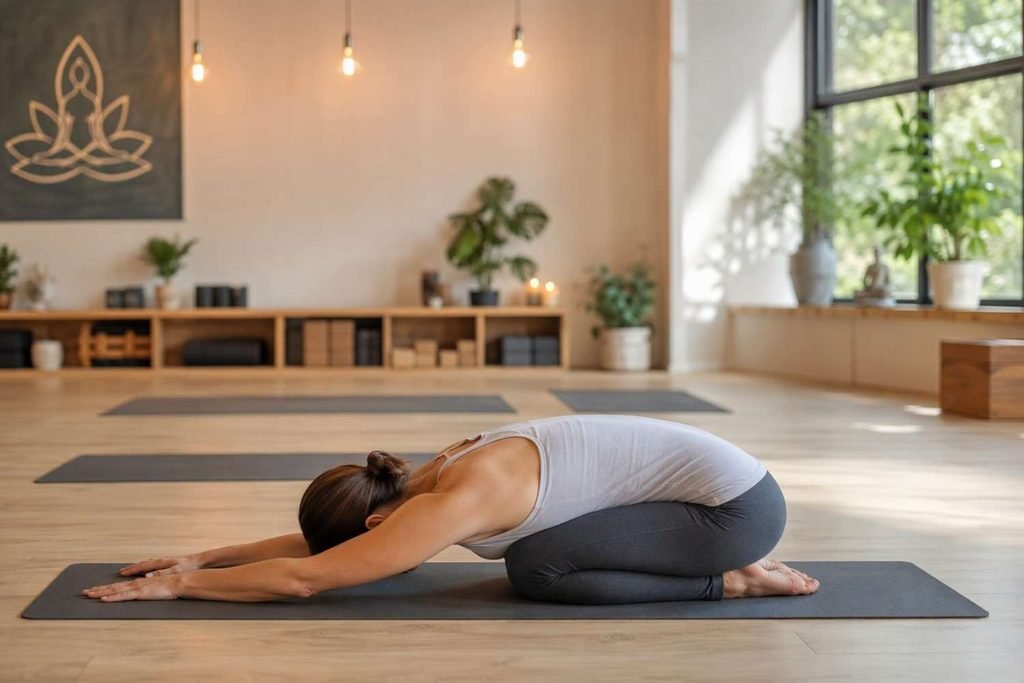
Child’s Pose is one of the most accessible yoga poses for low back pain. It creates a gentle stretch through the back, hips, and spine while also encouraging calm breathing. For many people, this is a great way to begin or end a short routine.
To do child’s pose, kneel on the floor, sit back on your heels, and reach your arms forward. Lower your chest toward the floor and rest your forehead on the mat. Let your breathing techniques stay slow and smooth while the body settles.
- Child’s pose may reduce tension in the lower back.
- It can stretch the spine without aggressive effort.
- It also promotes relaxation when stress is adding to discomfort.
2. Cat-Cow Stretch (Marjaryasana-Bitilasana)
Cat-Cow is a simple sequence that improves movement through the spine. These spinal Yoga for Back Pain stretches alternate between gentle rounding and arching, which can reduce stiffness and help warm up the back muscles before other poses.
Start on your hands and knees. Lift your head and tailbone as you arch the back for Cow, then exhale, round the spine, and tuck the chin for Cat. Move gradually, matching the motion to your breath rather than forcing a large range.
- Cat-cow can improve spinal mobility and flexibility.
- It may ease muscular tension linked to long sitting.
- It is a useful warm-up before deeper stretching or strengthening work.
3. Downward-Facing Dog (Adho Mukha Svanasana)
Downward-Facing Dog stretches the whole back body and can support spinal alignment. Because it also challenges the shoulders, core, and legs, it does more than one job at once. That makes it one of the best yoga poses for broader back support.
Begin on your hands and knees, then lift your hips toward the ceiling. Press your hands into the floor and straighten your legs only as far as comfortable. If your hamstrings feel tight, keep the knees slightly bent to avoid extra pull on the back muscles.
- Downward-facing dog lengthens the spine.
- It can reduce muscular tension across the back body.
- It also helps strengthen supporting areas like the shoulders and core.
4. Sphinx Pose (Salamba Bhujangasana)
Sphinx pose is a mild backbend that many beginners tolerate well. It lifts the chest while keeping the pelvis on the floor, so it gives your spine extension without the larger effort of stronger backbends. That can make it helpful for back pain relief.
Lie on your stomach and place your forearms on the floor. Then lift your chest gently while relaxing your shoulders away from your ears. Focus on gentle stretches rather than forcing height. You should feel supported, not compressed.
- Sphinx pose can strengthen lower back muscles in a mild way.
- It may improve posture and support natural spinal curves.
- It often helps reduce stiffness after long periods of sitting.
Creating a Gentle Yoga Routine for Low Back Pain
A gentle yoga routine for low back pain can be simple and short. Start with Child’s Pose to relax the back, then move into Cat-Cow to warm up the spine. (200 Hour Yoga Teacher Training in Rishikesh) After that, try Sphinx Pose for light extension and finish with a comfortable rest position. If your body tolerates it, add Downward-Facing Dog for a fuller stretch.
Keep the session calm and controlled. Gentle stretches done with good breathing often work better than long, demanding sessions. A balanced Yoga for Back Pain routine should aim for pain relief, improved movement, and steady confidence. If one pose increases symptoms, shorten it, modify it, or skip it that day. Consistency matters more than doing a lot at once.
Frequency and Tips for Effective Practice
When it comes to frequency, regular practice usually beats occasional long sessions. If back pain has been limiting you, a few minutes of daily stretches may feel more manageable than one hard workout. The goal is to build a habit your body can tolerate well.
You do not need perfection. Try a short routine a couple times a week at first, then build from there if you feel good. Over time, steady practice can support pain relief, improve movement, and make it easier to notice what helps most.
- Keep sessions short, especially in the beginning.
- Move with control and keep breathing through each pose.
- Track which poses calm your back pain and which ones do not.
Best Non-Yoga Back Pain Exercises to Complement Yoga
Yoga is helpful, but it does not need to work alone. Other exercises can complement it well, especially if your goal is both pain relief and better support for low back pain. Helpful options from basic back exercise plans include pelvic tilts, knee-to-chest stretches, lower back extensions, and bridges.
These movements target mobility and strength in different ways. Pelvic tilts can help stabilize the lumbar area, knee-to-chest stretches can reduce tension, and bridges can support the glutes and core. Lower back extensions may also strengthen the muscles along the spine. This is why yoga and physical therapy often overlap. Both can play a vital role in building a stronger, more comfortable back.
Special Yoga Considerations for Women with Back Pain
Women may experience back pain for several reasons, including hormonal changes, pregnancy, childcare demands, and long hours at a desk. Because these factors can vary by stage of their life, Yoga for Back Pain should be adapted to current needs rather than copied from a general routine.
Helpful options often include Child’s Pose, Cat-Cow Stretch, Bridge Pose, Reclining Pigeon Pose, and Supine Twist. These poses can support lower back pain by improving movement and easing tight hips or back muscles. If someone is pregnant, it is smart to speak with a doctor before starting or changing a routine. In some cases, physical therapy guidance may also help with safe modifications and better day-to-day movement patterns.
When to Seek Medical Advice for Back Pain Before or During Yoga
Yoga is not the right first step for every case of back pain. You should seek medical advice if pain is severe, getting worse, or starts after an injury. The same is true if you notice numbness, tingling, weakness in the legs, or loss of bladder or bowel control.
These signs may point to a problem that needs prompt assessment. In that situation, a doctor, physical therapist, or orthopedic surgeon can help identify the cause and guide treatment. Neurological pain should not be brushed aside as ordinary soreness. Once you know what you are dealing with, you can decide whether yoga is a safe form of exercise for you and what modifications are needed.
Detailed Step-by-Step “How to Do” and “Benefits” Sections for Each Yoga Pose
When you learn Yoga for Back Pain care, step-by-step instruction matters. Start with the setup, then move into the shape slowly, hold only as tolerated, and come out with control. This sequence reduces guesswork and helps you notice whether a pose feels supportive or irritating. Clear steps also make home practice easier.
The benefits of Yoga for Back Pain become easier to understand when each pose has a purpose. (mountain pose benefits) Child’s Pose can relax the back. Cat-Cow can improve spinal mobility. Downward-Facing Dog can lengthen the back body while building support. Sphinx Pose can encourage gentle extension and posture awareness. When you match the right pose to the right goal, pain relief becomes more practical and more consistent over time.
Additional Yoga Poses for Back Pain Not Covered in Your List (e.g., Bridge Pose, Supine Twist, Thread the Needle, Reclining Pigeon)
A few other poses may also help if your body responds well to them. Bridge Pose strengthens the glutes and core, which can improve spinal support. Supine Twist, sometimes called a reclined twist, may help with gentle spinal mobility and relaxation after a day of stiffness.
Thread the Needle can reduce upper and middle back tightness while improving shoulder movement. Reclining Pigeon, often grouped with pigeon pose variations, can open the hips and glutes. Tight hip muscles often add extra strain to the lower back, so this stretch may support pain relief in a useful way. These options can round out a routine when the basic poses feel comfortable and controlled.
Benefits and Considerations of Yoga for Back Pain (General Section)
The yoga benefits for back pain go beyond simple stretching. Regular practice may improve flexibility, reduce muscle tension, support posture, and increase strength around the spine. It can also encourage relaxation, which matters because stress often adds to physical tightness. These changes may improve quality of life when back discomfort has been limiting your routine.
At the same time, yoga should be approached with care. Not every pose fits every person, and results depend on alignment, pacing, and consistency. It is wise to begin gradually and respect your current limits. If you have severe symptoms or an existing condition, get guidance before starting. In many cases, yoga works best as part of a broader plan that may also include physical therapy and daily movement habits.
Evidence-Based Insights: What Does Research Really Say About Yoga for Back Pain?
Research discussions around yoga and back pain often focus on whether regular practice lowers pain intensity and improves function. The compiled information here supports the idea that consistent yoga may help chronic back pain, especially through flexibility, strength, posture, and stress reduction. It also stresses caution, since not every case should be self-managed without guidance.
| Research focus | Practical takeaway |
|---|---|
| Clinical trials | Often examine whether yoga improves movement and daily function in people with back pain. |
| Pain intensity | Changes may happen gradually with steady practice rather than after one session. |
| Minimal clinically important difference | Improvement should be meaningful to daily life, not just noticeable on paper. |
| Serious side effects | Risk is lower when poses are modified, pain is respected, and warning signs are not ignored. |
Yoga vs. Pilates vs. Other Sports for Back Pain Relief
There is no single best choice for everyone. Yoga can be excellent for back pain relief because it blends mobility, gentle strength, breathing, and relaxation. Pilates is often known for core control and stability. Other sports may help too, but only if they do not aggravate your symptoms.
The better question is what your body can handle safely and consistently. If stiffness and stress are major issues, Yoga for Back Pain may be a strong fit. If you need guided strengthening, pilates or physical therapy may feel more targeted. In real life, many people benefit from mixing approaches rather than picking sides. A safe routine is more useful than the most popular one.
Adapting Yoga for Absolute Beginners with Severe Back Pain
If you are an absolute beginner with severe back pain, keep your Yoga for Back Pain practice very simple. Start with the easiest positions, short holds, and plenty of support under the knees, hips, or chest if needed. Gentle stretches like Child’s Pose or a small Cat-Cow range may be enough at first.
The key is to avoid turning exercise into another source of strain. Stay away from fast movements, deep bends, or any pose that creates sharp discomfort. Severe back pain should always be treated carefully, especially if it is worsening or linked to leg symptoms. When in doubt, speak with a healthcare professional before you build a routine. Safe progress is the goal, not doing more.
Avoiding Harmful Practices: Yoga Mistakes that Worsen Back Pain
One common mistake is forcing depth instead of focusing on control. With back pain, that can push you into a painful position and irritate sensitive tissues. Another problem is rushing through transitions. Fast movements often reduce awareness and make form harder to maintain.
People with chronic low back pain also run into trouble when they copy advanced routines too soon. What looks easy on screen may not be right for your body. Harmful practices include ignoring sharp pain, holding your breath, and staying in a pose that clearly increases symptoms afterward. A better approach is simple: move slowly, respect your limits, and stop chasing shapes that your body is not ready to handle.
Non-Specific Low Back Pain: What It Is and Why Yoga Helps
Low back pain is often present without one clear, dramatic cause. In many people, it grows from stiffness, strain, long sitting, poor posture, or reduced activity rather than a single injury. That is one reason it can become chronic pain and linger longer than expected.
Yoga helps by addressing several of those factors at once. It improves flexibility, builds support, encourages body awareness, and reduces muscular tension. These yoga benefits can support back pain relief even when the discomfort feels broad or hard to pinpoint. The role of Yoga for Back Pain is not magic. It is steady, practical work that helps the body move better and feel more supported over time.
How to Track Progress and Know If Yoga Is Helping Your Back
To know whether yoga practice is helping, pay attention to more than one sign. Yes, pain intensity matters, but so does how you move through daily life. Can you sit longer, bend more comfortably, or walk with less stiffness? Those changes often show progress before pain fully settles.
You can also note how your quality of life changes over a few weeks. Maybe sleep feels easier, or you feel less tense after work. Keep your tracking simple so it stays useful. If back pain relief is not improving, or if symptoms are getting worse, stop guessing and get professional advice. Safe progress means the routine should help your life function better, not just leave you sore.
Conclusion
In conclusion, yoga offers a gentle yet effective approach to managing back pain. By incorporating essential poses into your routine, you can enhance spinal health, improve flexibility, and strengthen your back muscles. Remember to listen to your body and practice safety by making necessary adjustments and avoiding poses that may exacerbate your discomfort. As you explore the various techniques and strategies outlined in this blog, consider how they fit into your lifestyle and individual needs. If you’re ready to take the next step towards a pain-free life, reach out for a free consultation to learn more about personalized yoga practices tailored to your specific situation. Your journey to relief and well-being starts today!
Frequently Asked Questions
The best yoga for back pain usually starts with simple, gentle yoga poses. Child’s pose is a favorite for low back pain because it lightly stretches the spine and encourages relaxation. Cat-Cow, Sphinx Pose, and Downward-Facing Dog may also support pain relief when done with control.
Yes, yoga practice can help back pain and lower back pain for many people. It may improve flexibility, reduce tension, and strengthen support around the spine. Yoga also works well beside physical therapy, especially when movements are gentle, consistent, and matched to your comfort level.
A practical three-exercise mix for back pain relief could include pelvic tilts, Cat-Cow, and bridge pose. Together, they support mobility and strength for low back pain. Many physical therapy plans use similar basics, and yoga poses can fit in well alongside them for a balanced routine.
One of the worst things to do for back pain is force physical postures that create sharp discomfort. Harmful practices also include fast movements and ignoring warning signs. For lasting pain relief, move gradually and seek physical therapy or medical guidance if symptoms are severe or worsening.
Recommended yoga poses for back pain relief include child’s pose, Cat-Cow, Downward-Facing Dog, Sphinx Pose, Cobra Pose, Bridge Pose, and Supine Twist. For low back pain, start your yoga practice with gentle options and build slowly based on how your body responds.
The role of Yoga for Back Pain is to improve movement, reduce tension, and strengthen support around the spine. That can help pain relief and daily function. For chronic pain, yoga practice often works best as part of a larger plan that may include physical therapy.
It depends on your needs. Yoga is useful for flexibility, breathing, and relaxation. Pilates often focuses more on core control. For back pain relief, the best choice is the one you can do safely and consistently. In some cases, physical therapy and gentle yoga poses work well together.
No single posture fixes every case of back pain, but child’s pose often helps because it gently stretches the spine and encourages relaxation. Good posture correction and careful physical postures matter more than one magic shape. The best pose is the one that brings pain relief without strain.
Why does Yoga help in lower back pain?
Yoga helps lower back pain by improving flexibility, easing stiffness, and strengthening back muscles that support the spine. It also encourages slower, more controlled movement. That combination can support pain relief and may complement physical therapy when practiced carefully and consistently.
Yes, yoga can be a helpful option for lower back pain when you choose gentle stretches and avoid forcing movement. Start with yoga poses like Child’s Pose, Cat-Cow, and Sphinx Pose. If symptoms are severe, pair your routine with physical therapy or medical guidance for safer pain relief.
[…] English […]
[…] English […]
[…] English […]
[…] English […]
[…] English […]
[…] English […]