


Key Highlights
- Mountain pose is a foundational yoga pose that teaches proper alignment and steady body awareness.
- The benefits of tadasana include better balance, improved good posture, and stronger core support.
- This pose helps you reset between yoga poses and return to a natural, stable stance.
- Practicing mountain pose can support breathing, calm focus, and mental ease.
- Small adjustments in your feet, spine, and shoulders can reduce strain and improve form.
- Simple modifications make Tadasana more accessible for many people.
Introduction of Mountain Pose Benefit
Tadasana, or Mountain Pose, looks simple, but it plays a big role in your yoga practice. This foundational yoga pose teaches you how to stand with more control, balance, and ease. It brings attention back to your natural posture and helps you notice how your body is placed from the feet to the head. If you want a pose that supports both beginners and experienced practitioners, Tadasana is a strong place to start.
Understanding Tadasana (Mountain Pose)
At first glance, mountain pose benefit may seem like just standing still. In reality, it is one of the most important yoga poses for learning control and awareness. It asks you to align your feet, legs, spine, and shoulders with care.
When you practice it well, Tadasana helps you move closer to your body’s optimal posture. It also gives you a stable base that carries into other standing positions. The next sections explain where this pose comes from and why it matters so much.
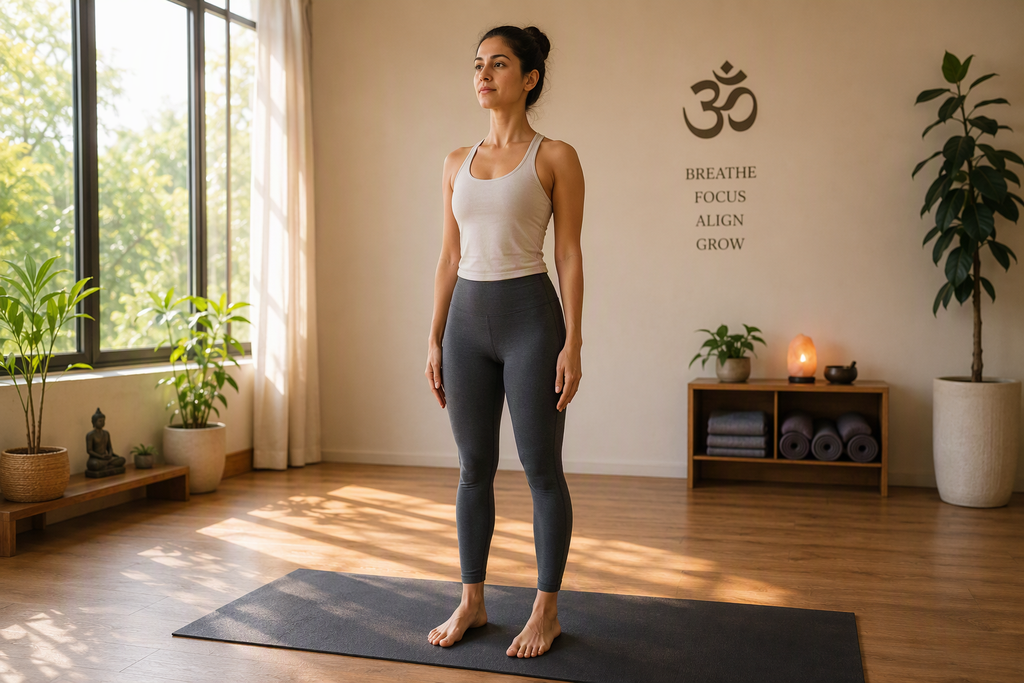
What is Tadasana and Its Origin in Yoga
Tadasana is the Sanskrit name for Mountain Pose. It is widely known as one of the most basic yoga asanas, yet it is far from empty or passive. The pose teaches you to stand with steadiness, balance, and attention.
In yoga, Tadasana serves as a reference point for many standing movements. You return to it between poses to check your position, reset your breath, and rebuild alignment. That simple pause can reveal a lot about how you hold tension and where your weight shifts.
Its origin is rooted in the broader tradition of yoga asanas that use stillness to build awareness. Rather than chasing complexity, Tadasana focuses on clear structure. That is why it remains central in modern practice and useful for all levels.
Why Mountain Pose Matters in Your Practice
Many people underestimate Tadasana because it does not look dramatic on the yoga mat. Still, this pose matters because it sharpens body awareness in a simple, static position. When the body is still, it becomes easier to notice uneven weight, locked knees, or a tense jaw.
It also supports good posture and balance before you move into other yoga poses. Yes, mountain pose can be used as a warm-up before other yoga poses because it helps you organize the body before more demanding shapes.
- It teaches you to spread weight evenly through both feet.
- It helps you reset your spine, chest, and shoulders.
- It creates a calm starting point for the rest of practice.
That foundation makes the step-by-step method much easier to understand.
Step-by-Step Guide to Tadasana
Learning Tadasana works best when you break it into simple actions. Even though it is one of the easiest-looking yoga poses, proper alignment takes attention from the ground up. Your feet, pelvis, ribs, and head all need to work together.
As you build the pose, think about creating a straight line through your body without becoming stiff. You want steadiness, not strain. The next parts walk you through how to do it and what errors to watch for.
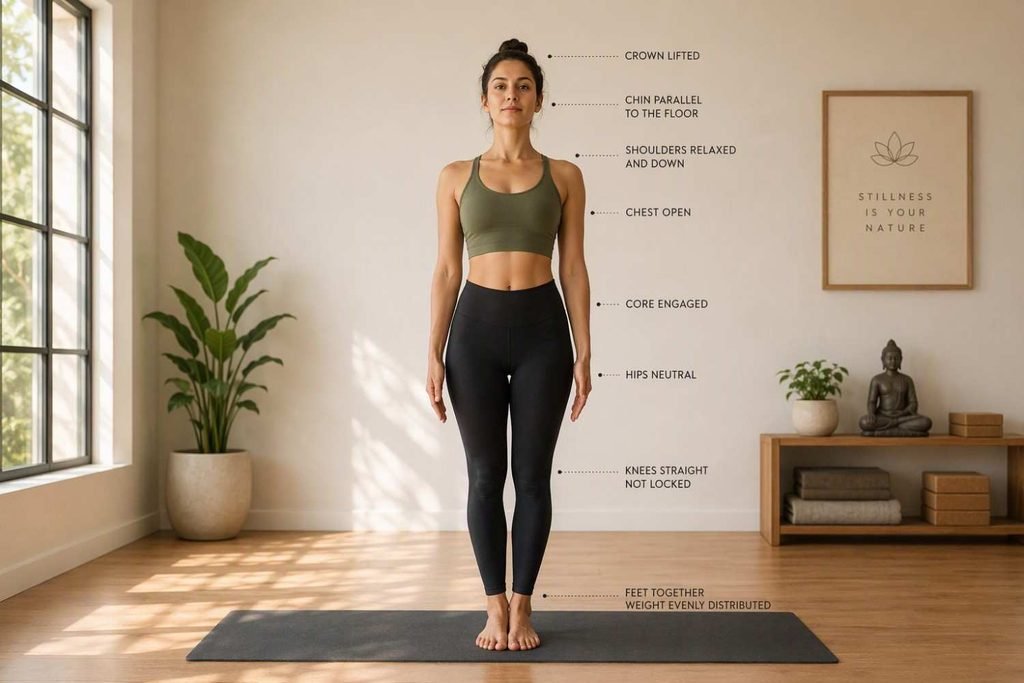
How to Perform Mountain Pose Correctly
Start on your yoga mat with your big toes touching and heels slightly apart so the outer edges of your feet stay parallel. Press evenly through the base of your big toes, little toes, and heels. Lift your arches gently and keep your knees soft, not rigid.
Next, bring your pelvis into a neutral position and keep the natural curve of your low back. Engage your core lightly, broaden your chest, and draw your shoulder blades down the back. Let your arms rest by your sides with your palms facing forward.
- Lengthen through the spine.
- Reach upward through the crown of your head.
- Keep your chin parallel to the floor.
- Breathe slowly for five to ten breaths, or up to one minute.
This is the correct way to do mountain pose step by step. Once you know the setup, fine-tuning becomes easier.
Common Mistakes and Tips for Proper Alignment
Yes, there are common mistakes to avoid in mountain pose. Because the pose is simple, people often stop paying attention. That can lead to poor proper form, such as locking the knees, leaning too far forward or back, or gripping the lower back.
Another issue is trying too hard. If you force the chest up or squeeze the shoulders, you create tension instead of support. Better body awareness helps you make smaller, safer changes and lowers the risk of injury.
- Avoid collapsing into the heels or the balls of the feet.
- Do not jam the ribs forward.
- Keep the neck relaxed and the face soft.
- Make slight adjustments instead of holding rigidly.
When you correct these habits, the pose feels more stable and useful. That opens the door to its physical and mental benefits.
Benefits of Mountain Pose for Body and Mind
The benefits of tadasana go beyond standing tall. Physically, it can improve balance, coordination, posture, and core engagement. It also gives you a simple way to notice muscle imbalances and make small corrections that support your physical needs.
On the mental side, the pose can create steadiness and calm. These mental benefits matter because a quiet stance often helps you breathe more slowly and focus better. The next sections break down the body and mind effects in more detail.
Proven Benefits of Mountain Pose for Posture, Balance, and Back Pain
The most proven benefits of Mountain Pose center on posture, balance, and body control. Since the pose teaches even weight distribution and spinal alignment, it can help you stand with more awareness and stability. It may also support relief of back pain linked to poor postural habits, though comfort varies by person.
For noticeable practice effects, hold the pose for five to ten breaths or up to one minute. Over time, regular repetition matters more than forcing a long hold. Research and related yoga study protocol discussions also connect yoga with support for posture, mood, and function.
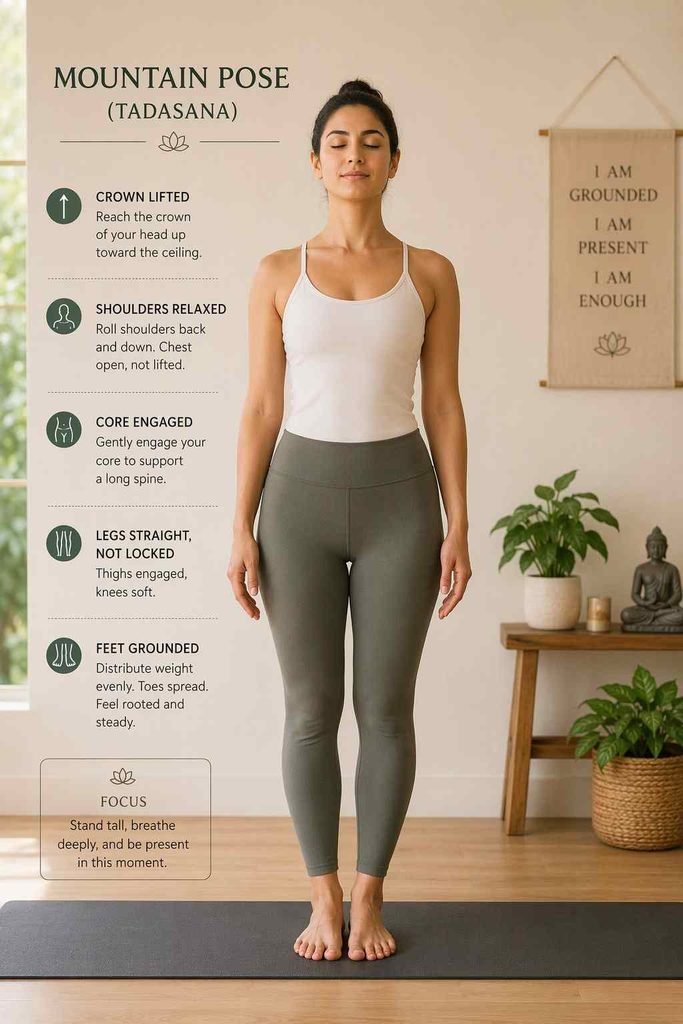
| Area | What Tadasana May Support |
|---|---|
| Posture | Better alignment of pelvis, spine, chest, and head |
| Balance | More even weight distribution through both feet |
| Back pain | Reduced strain from improved standing mechanics |
| Practice time | Five to ten breaths, or up to one minute |
These proven benefits make the pose useful in both short and long routines.
Mental and Stress Relief Benefits of Tadasana
Yes, mountain pose can have mental and stress relief benefits. Because Tadasana encourages slow breathing and stillness, it may help settle the nervous system and create a calmer mental state. A simple standing pose can become a quiet pause in a busy day.
Yoga as a broader practice has been linked with a positive effect on anxiety, depression, and psychological distress. In Tadasana, that may show up as less muscle tension in the jaw, shoulders, or chest, along with steadier attention.
- It encourages slower, deeper breathing.
- It gives you a moment to scan and release tension.
- It supports calm focus before or after movement.
These effects are subtle but meaningful. They also make precautions and smart modifications worth understanding before you practice regularly.
Precautions, Modifications, and Who Should Practice Mountain Pose
Tadasana is accessible for many people, but it is not automatically right for every situation. If you feel dizzy, unstable, or in pain, the pose may need to be adjusted. Paying attention to body awareness helps you notice when a small shift is enough and when you should stop.
These precautions matter because they reduce the risk of injury and fall risk, especially if you already have balance or joint concerns. The next section covers when to avoid the pose and how to modify it safely.

When to Avoid Tadasana and Safe Modifications
You may want to avoid or limit Tadasana if you have a headache, dizziness, lightheadedness, low blood pressure, or joint, back, or shoulder concerns. If you have pre-existing conditions, it is wise to speak with a healthcare professional before adding the pose to your routine. That is especially important if balance feels uncertain.
Safe modifications can make the pose more comfortable and practical. In some cases, a seated version works well and can feel like a gentle restorative yoga pose while still teaching alignment.
- Stand with feet hip-distance apart if pregnancy or tightness makes balance harder.
- Use a chair for seated Tadasana.
- Keep the knees soft instead of locked.
- Reduce the hold time if you feel strained.
- If you have chronic obstructive pulmonary disease, ask a professional how it fits your needs.
These modifications help more people practice with confidence. They also connect to health conditions that may benefit from Mountain Pose.
Health Benefits of Mountain pose
Some health conditions may benefit from Mountain Pose as part of a broader yoga approach. For people with Parkinson’s disease, Tadasana may support posture and balance. That can be useful because the pose teaches steady standing and controlled weight placement. It may also offer gentle support for people with ankylosing spondylitis by encouraging better alignment and flexibility.
There is also interest in yoga for chronic obstructive pulmonary disease. Since Tadasana promotes upright positioning and slow breathing, it may support breathing patterns and lung function, which connects to pulmonary function test goals in broader yoga work. Improved standing mechanics may also reduce stress on the lower back and help support blood circulation through calm, active posture.
Additional tips and best practices for Mountain Pose
Once you learn the basic setup, the finer points of tadasana start to matter. The best part is that you do not need a complicated routine to improve. A few careful checks can make the pose feel much clearer and more stable from one day to the next.
At the same time, individual differences matter. Your stance, comfort, and balance may not look exactly like image content in a guide, and that is fine.
- Focus on one to three body areas at a time if full alignment feels overwhelming.
- Soften your gaze on one fixed point ahead.
- Scan for tightness in the face, throat, and shoulders.
- Make small changes instead of chasing a perfect shape.
These habits keep the pose practical and personal. If you enjoy that simplicity, there are related poses worth trying too.
Related poses to try if you enjoy Mountain Pose
If Tadasana feels grounding, you may enjoy other similar asanas that build on the same upright awareness. Mountain Pose shares alignment principles with standing and seated positions that ask for calm control, steady breath, and balanced effort. It can even fit well beside somatic yoga or gentle movement practices that focus on sensing the body.
You can also compare yoga with other mindful movement systems rather than seeing it as separate from resistance training exercises or stretching. Here are a few poses mentioned as natural next steps:
- Urdhva Hastasana
- Vrksasana
- Dandasana
These poses use the same foundation in different ways. That makes Mountain Pose more than a single shape; it becomes a tool for broader physical and emotional support.
The Emotional and Energy Benefits of Mountain Pose
Mountain Pose can influence how you feel emotionally, not just how you stand. When your posture is more organized and your breathing steadier, you may notice a positive effect on your mood and attention. The pose creates a sense of steadiness that can feel reassuring, especially when your day feels rushed or scattered.
It may also support your energy levels in a quiet way. Rather than creating a burst of stimulation, Tadasana can help you feel awake, centered, and less tense. That changes your experience of movement in the rest of practice. A calmer body often moves with more control, and a clearer mind often responds with less stress and more ease.
Mountain Pose as a Foundation for Mindfulness and Meditation
Tadasana works well as more than a posture drill. It can also be a quiet moment of mindfulness. When you stand still and notice your breath, weight, and tension patterns, the pose becomes a reference point for your attention. You are not trying to escape the body. You are learning to notice it clearly.
That makes Mountain Pose a powerful way to prepare for meditation or to bring meditative focus into movement.
- Use the pose for a few slow breaths before starting practice.
- Return to it between standing poses to reset awareness.
- Let it anchor your attention when your mind starts to drift.
Over time, this simple routine can strengthen both calm focus and consistency. It also helps you notice possible downsides early.
Potential Downsides and How to Avoid Them
Tadasana is gentle, but it still has potential downsides if you ignore your body’s signals. The main issues come from forcing posture, standing through dizziness, or treating the pose like a rigid performance. That can increase discomfort and, in some cases, raise the risk of injury rather than reduce it.
The best way to avoid problems is to stay attentive. Proper alignment should feel supportive, not strained, and body awareness should guide each adjustment.
- Stop or modify if you feel lightheaded or unstable.
- Avoid over-tightening the lower body or shoulders.
- Shorten the hold if your back, knees, or neck feel stressed.
A respectful approach keeps the pose safe and useful. It also makes it easier to bring Tadasana into ordinary parts of your day.
Daily Life Applications of Mountain Pose
One reason Tadasana is so practical is that it extends beyond the yoga mat. You can use its lessons during everyday moments when you are standing in line, waiting for the elevator, or carrying bags. It teaches you to notice how you stack your body and where you place your weight.
That awareness can improve comfort and core strength during simple routines, even in places like the grocery store.
- Stand evenly on both feet while waiting in line.
- Relax your shoulders instead of hunching while holding a bag.
- Lengthen through the spine when standing at a counter.
These small habits turn a yoga pose into a daily skill. Once that happens, building a sustainable routine feels much easier.
How Long and How Often: Creating a Sustainable Routine
If you want to see benefits, practice Mountain Pose regularly rather than for a long time all at once. A sustainable routine could mean holding the pose for five to ten breaths or up to one minute and repeating it during your yoga practice. Daily or frequent short sessions are more realistic than rare intense ones.
That pattern fits what many yoga approaches suggest, even when broader research such as a study protocol or randomized controlled trial looks at yoga over time rather than one single session.
- Practice it at the start of standing sequences.
- Use it between poses to reset alignment.
- Add one short round during everyday breaks.
This approach keeps Tadasana simple, repeatable, and useful. With that in place, the key takeaways become clear.
Conclusion
In summary, Tadasana, or Mountain Pose, is a powerful foundational pose that offers numerous benefits for both your body and mind. By understanding its correct alignment and practicing it regularly, you can enhance your posture, improve balance, and cultivate a sense of calm and mindfulness. Whether you’re a beginner or an experienced yogi, incorporating Tadasana into your daily routine can lead to significant improvements in your overall health and well-being. Remember to listen to your body and adjust your practice as needed to enjoy the full benefits safely. If you’re eager to explore more about yoga and its positive impacts on mental and physical health, don’t hesitate to reach out for a free consultation with our experts!
Frequently Asked Questions About Mountain Pose Benefit
Yes, Mountain Pose is suitable for beginners. It is a foundational yoga pose that helps you learn body awareness, balance, and good posture without complicated movement. On a yoga mat or even standing at home, it gives you a simple way to practice alignment from the ground up.
A sustainable routine works best. Practice this static pose daily or several times a week for five to ten breaths, especially during everyday moments when you are already standing still. The benefits of tadasana build through repetition, not force, which also matches the spirit of many yoga study protocol designs.
Mountain Pose may support breathing by encouraging an upright chest and steadier posture. When you lengthen through the crown of your head and relax excess tension, breathing can feel easier. That may also have a positive effect on energy levels, especially in yoga approaches linked to pulmonary function test goals.
The primary proven benefits include improved posture, better balance, stronger body awareness, and support for standing alignment. Tadasana may also help reduce back pain related to poor mechanics by guiding you toward your body’s optimal posture in a simple, repeatable way.
Tadasana improves alignment by teaching your lower body, spine, and head to work together in a straight line. As you organize your feet, engage the legs and inner thighs, and settle the shoulder blades down your back, your posture becomes more balanced and efficient.
If you have pre-existing conditions, use modifications and avoid pushing through dizziness, pain, or instability. People with low blood pressure or chronic obstructive pulmonary disease should check with a healthcare professional first. A chair-supported or seated version can work as a gentler, restorative yoga pose with less risk of injury.
Beginners can absolutely learn Tadasana. It is a foundational yoga pose that teaches proper alignment and body awareness in a very direct way. While experienced practitioners may notice more subtle details, the pose is easy to begin on any yoga mat and valuable at every level.
[…] English […]
[…] English […]
[…] English […]
[…] English […]
[…] health mountain pose benefits are broader than many people expect. This foundational standing position helps improve posture and […]